
Advertisment

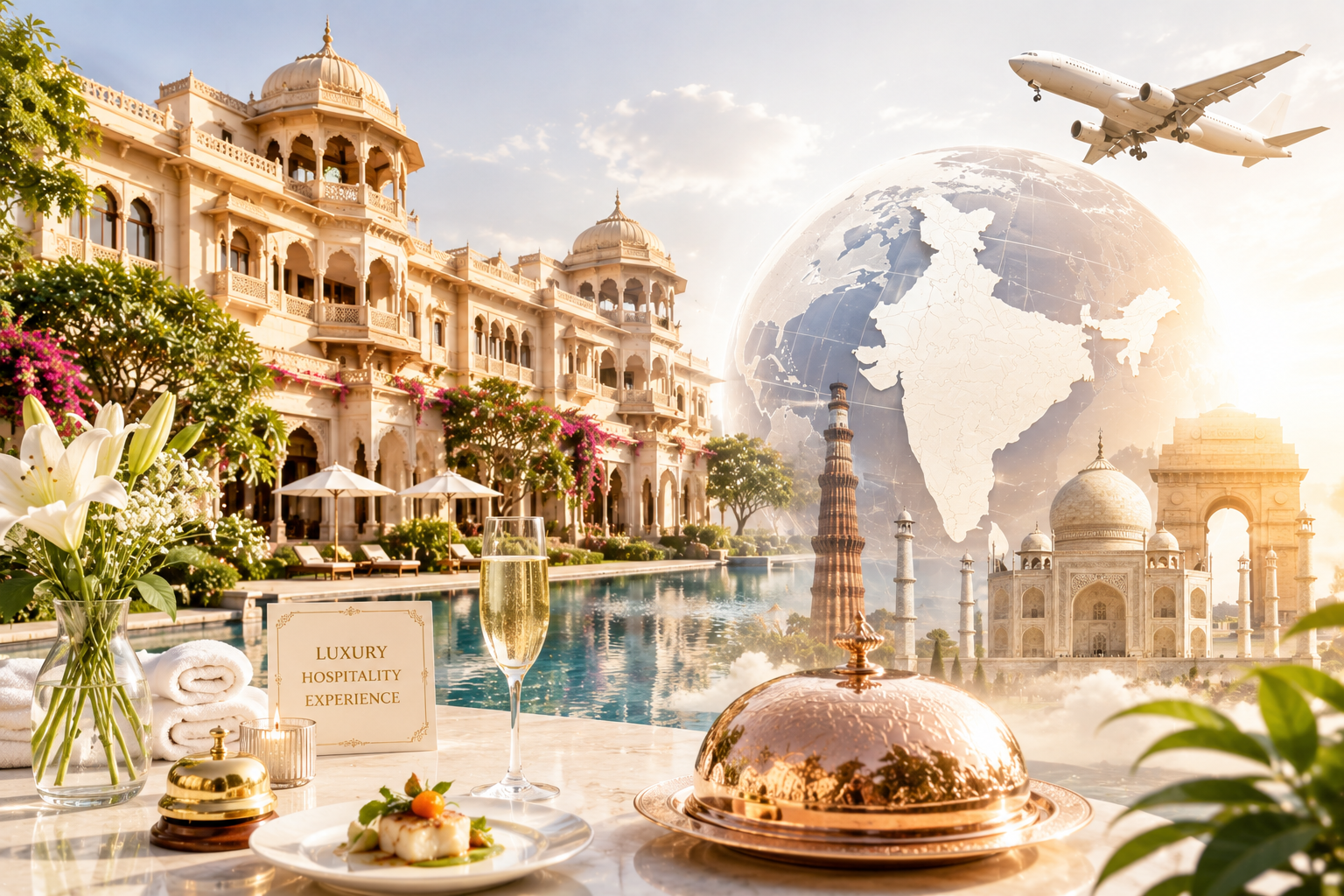
From the moment you step into the Taj Lake Palace, floating on Lake Pichola, or dive into a private plunge pool villa at an Oberoi resort in the backwaters of Kerala, it is immediately clear that India’s luxury hospitality sector is now vying on a global stage. be it in the backwaters of Kerala or the Taj Lake Palace. It is a standard which is being established.
The tourism business in India is in a shift that is not immediately obvious. For those who are visiting from abroad, India is proving to be the perfect place to relax, rejuvenate and avail of world-class leisure amenities for a country that can provide more than a cultural pilgrimage. This is backed by the facts. The luxury hotel market in India was valued at $3 billion in 2025 and is expected to rise at a healthy compound annual growth rate (3.8%) to more than quadruple to $6.30 billion in 2034. Even more amazing is the fact that the whole luxury travel market is projected to reach 75.7 billion USD in 2025 and 106.5 billion USD by 2034.
The idealistic Indian tourist has wanted to travel to other countries for a long time. Specifically, the Maldives for a relaxing beach vacation, Europe for historical sites and Dubai for high-end retail therapy. That equation is changing, slowly but surely. The luxury high-net-worth Indians want is in their own backyard, as seen by the growing number of them during the pandemic. This is because their discretionary finances are increasing and their desire to travel has bounced back.
Between 85% and 90% of the country’s tourism revenue originates from within the country, with the luxury market particularly busy. Hotel brands such as ITC, Taj and Oberoi, and boutique hotels that are just emerging, are investing in amenities that will give guests personalised concierge services, organic farm-to-table cuisine, and spa facilities that can rival the best in the world. You may do all this without the hassle of travelling to another country.
There has been a significant surge in bookings for 5-star hotels and resorts in the US throughout summer 2026. With the hassles of visa permissions and volatile geopolitical scenarios, affluent Indians are looking at their own country as a destination for vacation ideas for holidays. In response, five star hotels in India are beginning to provide regional food, culture centred itineraries and health retreats with an Ayurvedic and area inspired focus.
The country has a vast array of alternatives and India is one of the first countries that come to mind when people talk about luxury travel around the world. Many of these were palaces used by the royal family, and to stay in one of Rajasthan’s palace hotels is a living experience that no European château can match. Kerala is increasingly a destination for wellness holidays for travellers from the West, East Asia and Europe and the backwater resorts in that region offer just that in abundance. The boutique buildings of Goa are great examples of how you can marry contemporary design sensibility with Portuguese historical grandeur.
We are expanding our trip destinations. Instead of the regular Rajasthan, Agra and Delhi itinerary, you may try the eco-luxury resorts in the tiger reserves of Madhya Pradesh and the vineyard estates of Maharashtra and Himachal Pradesh. This global expansion has attracted a more diverse mix of tourists from other countries to visit. These tourists are as interested in comfort as authenticity.
The number of foreign visitors who have been to India in the past several years has reached 18.89 million, and the number is anticipated to climb further. The government’s move to introduce the electronic visa program has also facilitated entry into India for high net worth visitors from major source markets. The Heritage Hotel project and the creation of wildlife circuits have helped India improve its premium tourism offering.
India’s presence at the International Tourism Board Berlin 2026 (ITB Berlin 2026) is a confident and image-conscious attempt to grab the attention of international luxury tourists. This is linked to a global advertising campaign, being conducted in association with Netflix. We are sending out a loud and obvious message that India is not only a destination for cheap holidays. It is of the best quality conceivable.
The funds are being directed to the right places. The company was given the go-ahead to build a new premium hotel in Hyderabad with 330 rooms at an investment cost of ₹632.8 crore. This project was slated to happen in February 2026. Leisure travel, destination weddings, business bookings and meetings, incentives, conventions and exhibitions (MICE) tourism are expected to fuel the bulk of the growth for the hotel market in India in FY26, growing at a rate of between 9 and 12 percent.
The saga of five-star hospitality is only beginning within the borders of India. There are new metro terminals being built and airport infrastructure is being upgraded under Modified UDAN, making it easy to travel to premium destinations which were not accessible earlier. Kochi, Amritsar and Varanasi are among the Tier-2 cities witnessing an increase in number of luxury hotel investments.
There is a confluence of factors that are contributing to the amazing and long-term success story that the luxury hotel business in India is enjoying. These include rising domestic prosperity, a revival of international immigration and a government that is vigorously marketing India abroad. This is something that India’s wealthy tourists have realised for a long time: this country houses some of the greatest hotels across the planet. Now the rest of the world is beginning to see what is happening.
Category:
Blogs
Most Recent






Advertisments