
Advertisment

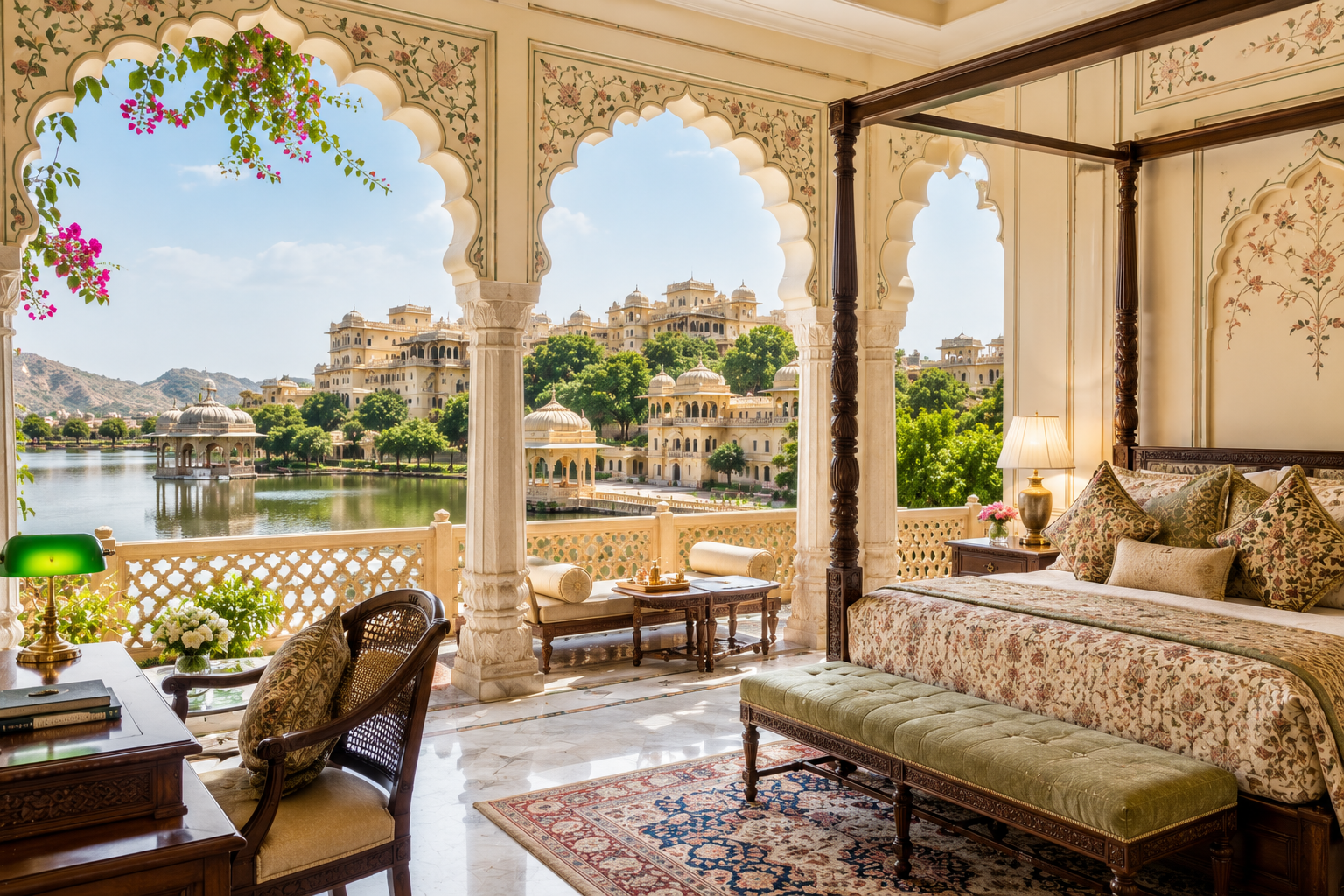
Picture yourself waking up in a 400-year-old Rajput castle, drinking a chai tea while the sun rises above sandstone battlements, then ordering your breakfast on your smartphone. People all across the world are going nuts for this new perspective on India.
The hotel business in India has witnessed a major turning point in its history. By the year 2026, India’s palaces, havelis, forts and family estates were among the most desired spots on the planet. The reason for this is because tourists from all over the world value meaningful experiences more than material wealth. The country is not only a peaceful destination but also an opportunity for travellers to immediately immerse themselves in the culture of the country.
India has a very diverse accommodation environment and has a lot to offer in the heritage accommodation space. Rajasthan boasts more than a hundred historic royal homes, which are now open for the guests. Accommodation varies from the magnificent Umaid Bhawan Palace in Jodhpur, still in use by Jodhpur’s royal family, to modest boutique havelis hidden away in the old lanes of Jaipur, which has rows of blue walls. Not only do the guests stay in these residences, but they are also part of the stories that are told in those places.
The movement is quite common outside the state of Rajasthan. The colonial-era homes and plantation estates of Kerala have a more muted grandeur than the spice-scented hills that cradle them. In the past the residences of the merchant elite of Tamil Nadu, most often known as the Chettinad, have been wonderfully preserved. When you walk in you will notice Italian marble flooring and teak columns from Burma. Historic royal residences atop pine-clad hills of Himachal Pradesh. Mysore has a historical circuit connecting Wodeyar royal palaces to the garden estates created by the British.
According to India’s Ministry of Tourism, there has been a twofold increase in heritage and experiential accommodation premium inbound tourist bookings in five years to almost 35% in early 2026. That is a large increase in the last five years.
A combination of circumstances is expected to make this year the most successful ever for historical tourism in India.
First of all, the objectives that are being considered by international tourism have changed. Post-pandemic tourists, especially from the Americas but also from Europe and East Asia, have been avoiding mass-market resorts. It is most evident in the case of holidaymakers from these locations. They want true stories, cultural immersion and sense of location, all of which a regular five-star hotel is unable to provide. Authentic durbar halls of the 17th century cannot be replicated artificially; yet the heritage treasures of India can offer exactly this kind of experience.
Second, better connection within India has allowed a long-standing barrier to be removed. With the expanded e-Visa system and the boost of international aeroplane lines, it is now easier than ever for you to visit India. Now more than ever before. In recent years, the number of tourists from the United States of America, France, Germany and Australia has reached the highest ever.
And the third, is that historical stays in India are the best form of the ‘quiet luxury’ style that has grabbed the world of lifestyle culture by storm. In 2026, affluent tourists will pay a premium for experiences that include the usage of antique stone, handmade fabrics, illuminated courtyards, and the languid pulse of a haveli morning.
The conservation rationale built into the design is what makes the concept of heritage hospitality so attractive in India. Tourism results in the preservation of properties, repairs and maintenance of properties which could otherwise be in a condition of disrepair. Families that lack the means to maintain ancestral estates are deliberately finding a way forward by converting them into boutique stays. Family mansions are being turned into boutique lodges.
Organisations like the Indian Heritage Hotels Association (IHHA) have been a great help in a number of areas including setting standards, training personnel in hospitality that suits the period and marketing properties to audiences around the world. The value of historical tourism in India has also been recognised by the United Nations Educational, Scientific and Cultural Organization (UNESCO) as an example to maintain a balance between economic development and preservation.
The towns get the benefits too, even in the neighbourhood. The increasing demand of handicrafts has led to revival of abilities that were on the verge of extinction like traditional chefs who specialise in royal culinary specialities, folk musicians and artisans.
A common thread running through reviews the globe over is that heritage stays in India have an emotional connect that modern hotels simply cannot match. That is something that is said again and again. The guests felt more like “honoured guests of history” than customers, they said. No corporate hospitality handbook can replicate the unique touch that is provided by the customised service, which is often overseen by members of the royal families that originally ran the establishment.
India’s traditional hotel business faces a range of issues of different magnitude. The patchwork infrastructure outside the major circuits needs fixing, and smaller properties need to be more digitally aware. And there are also issues of sustainability that must be addressed.
The way, on the other hand, is readily visible. India has a huge role in everything when it comes to a world eager for truly remarkable experiences. The year 2026 is the year that the globe is finally at the door, and its palaces are real, not copies or amusement parks.
Category:
Blogs
Most Recent





Advertisments