Advertisment

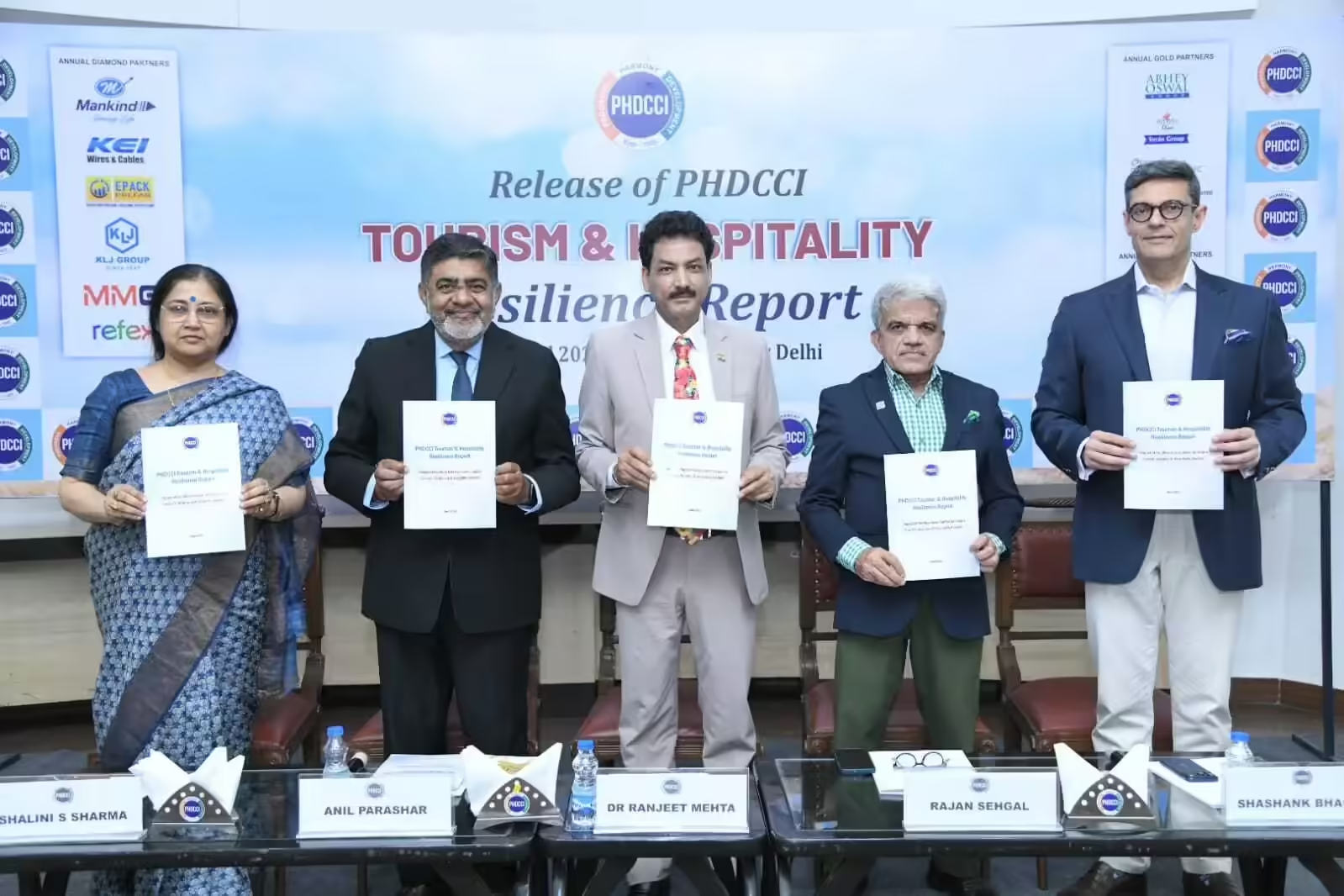
Escalating geopolitical tensions in West Asia have begun to significantly disrupt India’s aviation, tourism, and hospitality sectors, with the industry staring at an estimated loss of ₹18,000 crore, according to a recent report by the PHD Chamber of Commerce and Industry (PHDCCI).
The report, titled “Impact of the West Asia Conflict on India’s Tourism, Aviation & Hospitality Sectors,” highlights that inbound tourist traffic to India has declined by 15–20 per cent, as global travellers adopt a cautious approach amid ongoing uncertainty in the region.
Aviation Takes the Biggest Hit
India’s aviation sector has emerged as the worst-affected, grappling with widespread operational disruptions. Airlines are facing airspace restrictions, flight cancellations, and longer rerouting times—often extending journeys by up to four hours on key international routes.
These changes have sharply increased fuel consumption and operational costs, with aviation turbine fuel (ATF) already accounting for nearly 35–40 per cent of airline expenses. Reduced efficiency of Middle East transit corridors has also led to higher airfares and weakened connectivity, impacting both inbound and outbound travel demand.
Shift in Travel Patterns
The conflict has also triggered a shift in outbound travel trends. Indian travellers are increasingly opting for short-haul destinations such as Southeast Asia, while long-haul routes—particularly those dependent on Middle Eastern transit hubs—have moderated.
Hospitality & F&B Under Pressure
While the hospitality sector continues to benefit from strong domestic demand, segments dependent on international travellers—especially luxury and business hotels—are under pressure on margins. Rising input and energy costs are further straining profitability.
The restaurant industry is facing even greater challenges, with input cost inflation estimated at 10–15 per cent due to higher prices of imported ingredients, logistics, and energy. Industry estimates suggest that nearly 10 per cent of restaurants have shut down, with monthly business losses reaching approximately ₹79,000 crore. Domestic Tourism Offers Cushion
Despite these challenges, domestic tourism continues to act as a stabilising force. Trends such as staycations, business-leisure travel, and experiential dining are helping sustain demand across sectors, partially offsetting the decline in international travel.
Policy Roadmap for Resilience
The report outlines several measures to mitigate the impact, including diversification of international air routes, reduced dependence on conflict-prone regions, rationalisation of taxes on ATF and hospitality services, and enhanced bilateral air service agreements. It also calls for targeted financial support for MSMEs and stronger industry-government coordination.
While the ongoing crisis presents short-term headwinds, industry experts believe it also offers an opportunity for India to build a more resilient and diversified tourism ecosystem, backed by strong domestic fundamentals and strategic policy interventions.
Category:
News and Updates
Most Recent






Advertisments