
Advertisment


A new report compiled by Tourism Economics on behalf of Arabian Travel Market (ATM) predicts that by 2030, total tourism expenditure in the Middle East will be 50% higher than in 2024, generating nearly US$350 billion.
The ATM Travel Trends Report 2025 reveals insights into the trends and transformations redefining the travel sector in the Middle East and worldwide, including the surge of business travel, the growth of the luxury segment, and the boom in regional sports tourism. The report highlights exceptional growth in Middle East travel spending, projected to exceed 2019 levels by 54% this year and anticipates an annual growth rate of over 7% from 2025 to 2030.
Danielle Curtis, Exhibition Director ME, Arabian Travel Market, said: “The report’s findings confirm that travel growth in the Middle East is robust, with annual growth averaging more than 7% through 2030. Bold national visions, game-changing developments, and enhanced connectivity are some of the key factors driving this momentum.”

Underscoring the Middle East’s strong position in global tourism, inbound travel from outside the region is projected to grow by 13% annually until 2030, and outbound business travel is forecasted to surge at a rate of 9% per year.
European source markets account for 50% of all leisure travel to the Middle East, with India and the United Kingdom being the top two inbound international leisure source markets. China is also a critical market, ranking third by value, with leisure spend expected to increase by 130% by 2030. By 2030, tourists from the Asia-Pacific region and Africa are expected to double the number of nights they spend on vacation.
For outbound travel, Saudi Arabia and Egypt dominate regional flows, while Thailand and the United Kingdom lead as preferred long-haul destinations.
The four largest airlines in the region – Emirates, Etihad Airways, Qatar Airways and Saudia – have placed nearly 780 aircraft orders with Boeing and Airbus, representing major expansions to their existing fleets. This significant investment underscores the region’s strategic focus on becoming a global aviation hub and meeting the rising demand for passengers over the coming decade.
The report highlights how the Middle East is emerging as a global centre for business events. It predicts that spending on business travel in the region will grow 1.5 times faster than the global average through 2030. The region’s strategic location at the centre of Asia, Africa, and Europe supports business and leisure travel, with the latter on a robust trajectory for growth.
The sector plays a vital role in developing the region’s reputation for hosting major events. It is expected to experience the second-fastest rate of business travel growth among all global regions, underscoring the increased potential for combining business and leisure travel, also known as ‘bleisure’.
Curtis commented: “At ATM 2025, we recognised the industry’s hunger for innovation in travel technology as well as the rising demand for business travel across the region. In response, we launched two dynamic new zones, IBTM@ATM and the Innovation Zone, designed to empower our growing audience to shape the future of travel with the speed and scale our exciting industry demands.”
The region is also witnessing unprecedented growth in luxury and lifestyle tourism, attracting a new generation of high-net-worth individuals drawn to exceptional Middle Eastern hospitality, curated experiences, and premium cultural events. The report projects that global spending on luxury leisure hospitality will continue to grow rapidly, reaching over US$390 billion by 2028.
“Travellers drawn to the Middle East tend to spend more on travel overall, nearly 60% habitually spending on luxury experiences while travelling compared to under 40% among travellers who favour other destinations,” added Curtis.
In the Middle East, developers have established over 170 luxury hotel properties, with nearly 100 located in Abu Dhabi and Dubai. Currently, 22 more are under development. With several luxury properties in the pipeline among Saudi Arabia’s Giga projects, the region will continue to serve as a preferred destination for luxury and leisure travellers.
Following in the footsteps of the Qatar 2022 World Cup and Dubai Expo 2020, the Middle East region has a proven track record for successfully hosting high-profile entertainment and sports events. According to the ATM Travel Trends report, the strong appetite for sports tourism in the region is expected to drive a potential growth rate of 63% in the coming years, with the 2034 FIFA World Cup in Saudi Arabia set to sustain this momentum further.
According to the report, golf, motorsports, football, cycling, and esports are all benefiting from heightened visibility and investment in the region. This surge in sporting and entertainment events is significantly boosting the travel industry, driving increased demand for hotel stays, flights, and related services, creating a ripple effect that supports broader tourism growth.
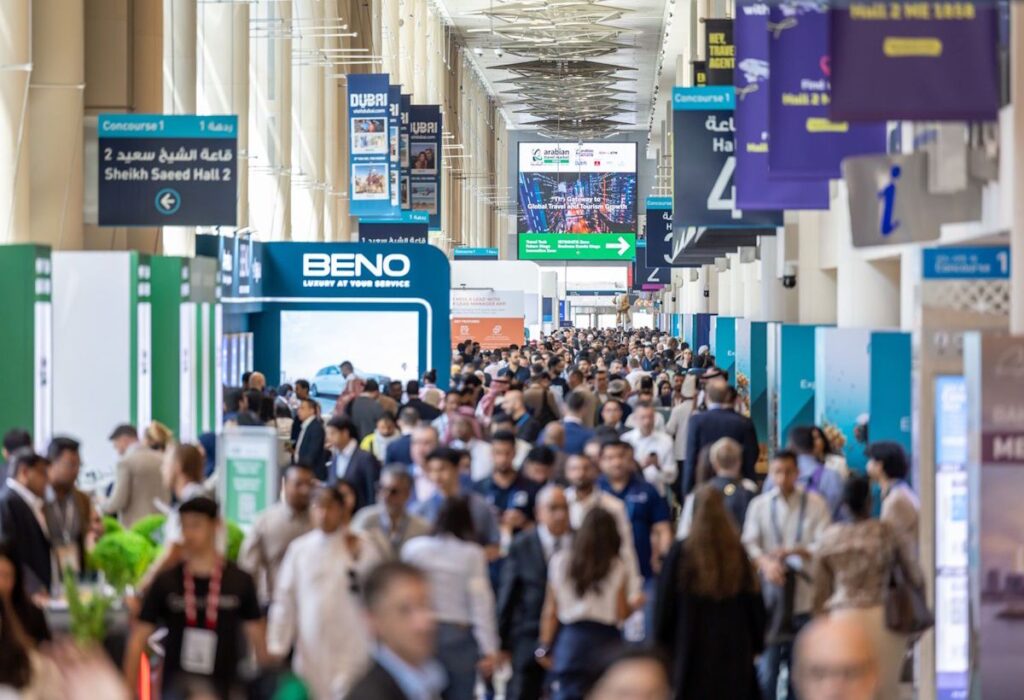
ATM is the leading international travel and tourism event held annually in Dubai. It plays a vital role in shaping the future of global travel. Held at the Dubai World Trade Centre, the 2025 Edition welcomed over 55,000 industry professionals from 166 countries, achieving year-on-year growth of 16%. The next Edition will take place from 4-7 May 2026.
For more news visit our site: Click here
Tags:
Arabian Travel Market
ATM Travel Trends Report 2025
Business Travel
Economic Growth
luxury travel
Middle East Tourism
tourism
Tourism Spending Forecast
travel
Category:
News and Updates
Most Recent






Advertisments