
Advertisment

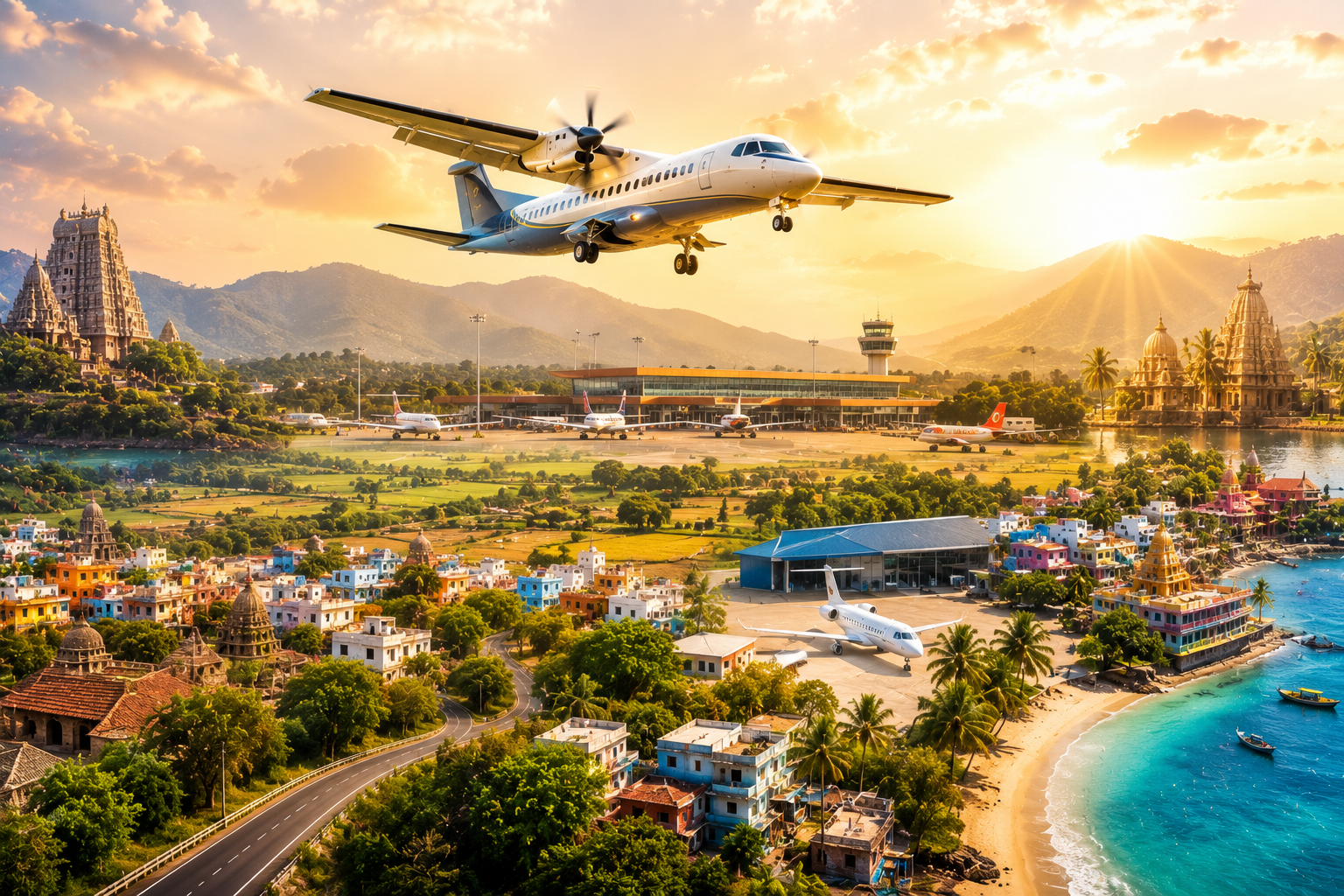
Revolutionary development has taken place in the aviation business of India. While the likes of Delhi-Mumbai and Bengaluru-Hyderabad will continue to get their fair share of traffic, the real development story is in the smaller cities of the country. The fast development of regional aviation services linking secondary and tertiary cities, is reshaping the transport and commerce market. This expansion is also offering new opportunities for investment, economic mobility and tourism.
India’s smaller cities are becoming critical nodes in the country’s domestic aviation network, and fast. Several factors are driving this, including government-backed regional connectivity projects, increasing disposable income, improving airport infrastructure and evolving passenger behaviour. Across the whole of India, from the biggest towns such as Dehradun and Rajkot to the most rural regions like Jharsuguda, Hubballi and Darbhanga, flying has grown increasingly prevalent.
This increase reflects a major shift in tourism patterns, hotel investment and regional business relationships, and also creates potential for meetings, incentives, conventions and events (MICE) for the travel trade industry. Another sign of this is an increase in the mobility of the passengers.
Regional Connectivity Scheme Fuels Aviation Expansion
The government of India has started a program called UDAN – which is a translation of “Ude Desh ka Aam Nagrik”. This was a vital part of mainstreaming air travel and so is crucial to this development. Since its first implementation, the program’s basic purpose has been to minimise the cost of regional flights, while encouraging airlines to travel to areas that are underserved and unserved to them.
The results have totally surprised us. In recent years, airports that have seen low traffic are increasingly being used to accommodate regular commercial operations. Previously reliant on long rail or road travel, cities are witnessing a considerable reduction in journey time and an increase in economic activity as a result of the introduction of direct air links to key centers.
Regional and national airlines are increasing the number of domestic routes. Airlines are adding smaller planes and more fuel-efficient fleets to make their routes more economically viable and to make their operations more flexible. These fleets are well suited for short-haul regional flights. At the same time, airports in smaller cities are upgrading their facilities to deal with the increased number of passengers.
These freshly found simplicity of access are opening up brand new consumer bases to the hospitality and tourism enterprises. Tour operators are now able to give packages including destinations that were once regarded too tough to package. A better relationship with the surrounding area is good for ecotourism, historic travel, pilgrimage circuits, weekend tourism, for example.
Research analysts predict that the next wave of expansion in the aviation business in the country would be fuelled by new regional lines connecting India’s aspirational areas, rather than oversaturated urban routes.
Tier 2 and Tier 3 Cities Become Economic and Tourism Hubs
Another factor helping to accelerate the economic expansion of smaller towns is the exponential growth of regional flights. The development in air connectivity has opened up previously inaccessible locations to a flood of corporate capital, industrial enterprise, educational institutions and healthcare services.
Cities with expanding manufacturing, pharmaceutical, technology and logistics industries have experienced a substantial increase in demand for business travel. Frequent air flights are becoming increasingly important for executive mobility and supply chain coordination in industrial clusters in places like Surat, Coimbatore, Indore, Lucknow and Bhubaneswar. This is because the importance of these services is growing.
Simultaneously, the tourism industry is facing a decentralisation effect. There has been a recent resurgence of interest in rural places that are attractive geographically and culturally alive, as an alternative to densely populated urban centres.
And the spiritual tourism business is another major winner. The increased ease of access to flights has resulted in a large increase in footfall in cities connected with pilgrimage circuit. Hotels, transport services and local tour operators are also upgrading their tourist infrastructure at sites associated with the Jain, Buddhist, Hindu and Sikh historical trails.
The rising need for regional air links is one of the factors that have contributed to the growth in the prevalence of remote work and the growth in blended travel trends. More and more professionals are taking the chance to mix business and pleasure to smaller communities. This is mainly because of the lower housing costs, the better quality of life and the more interesting tourism attractions of smaller cities.
This development is especially important in the context of business-to-business travel. Various kinds of businesses such as destination management companies (DMCs), travel and tourism bureaus (RTBs), hotel chains, aviation service providers and meetings, incentives, conventions and exhibitions (MICE) operators are now making significant inroads into non-metropolitan locations.
The long-term promise of aviation-led accessibility is already prompting some of the better-known hotel brands to accelerate their plans for expansion in secondary and tertiary places.
Infrastructure, Technology, and Airline Strategy Drive the Next Phase
Aggressive investment in infrastructure and upgrade of technology capabilities are helping India’s regional aviation industry to take off. In the next few years, the government plans to drastically increase the number of operational airports across the country as part of its broader airport expansion plan.
Regional airports are addressing the increased demand for their services by investing in new greenfield airports, renovating terminals and runway infrastructure, and adopting digital passenger processing systems. The integration of rail and metro systems and highways are also improving access to airports in smaller cities, all of which are enhancing multimodal connectivity.
Airlines are adjusting their business strategies to reflect shifting tastes of their passengers. More carriers are testing point-to-point regional links, rather than metro-to-metro lines. This also leads to a rise in the operational efficiency apart from reducing congestion at the key hubs.
Full service airlines are expanding their regional operations to draw business travellers from distant places. Budget airlines continue to command most of the market share. “Fares are staying low, because of the rise of new competitors, which is leading to an even larger increase in demand for passengers.”
Technical innovations are also doing a great deal to spur expansion in regional aviation. Mobile-first booking platforms, digital payment systems, artificial intelligence-driven pricing tactics and travel apps that are localised in their respective languages are making it easier for first-time flyers to purchase flights.
The most important point is the tremendous growth of the middle class in India, which is the main engine for sustained demand for aviation. The desire for formal aviation from first time passengers from smaller places will benefit airlines and travel firms by earning a large amount of money in the long term from this inflow of passengers.
The growth of regional air routes has continued, resulting in a major change in the geographic composition of India’s aviation ecosystem. Airports that are located outside India’s major cities will have a huge role to play in the future of Indian aviation. Instead it is being slowly moulded by the aspirations, mobility and economic aims of the second and third tier population in India.
This transition provides some of the most exciting potential for growth in the tourist and commerce industry over the decade. Regional aviation is not just about connecting cities but also connecting markets, industries, tourism economies and millions of new tourists to India’s larger growth story. That’s regional aviation at its best.
Category:
Blogs
Most Recent






Advertisments