
Advertisment

India’s Ministry of Tourism moved on two fronts in a single day, signalling a coordinated attempt to modernise both the marketing and the regulatory backbone of the country’s travel and hospitality sector. For trade partners — inbound and outbound tour operators, DMCs, hoteliers and OTAs — the twin announcements point to a market that is preparing to compete more aggressively for global travellers over the next few years.
Google India Partnership: Betting on AI and Data for Destination Marketing
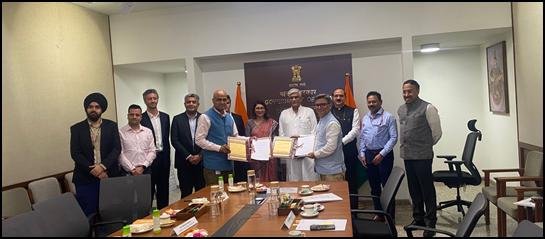
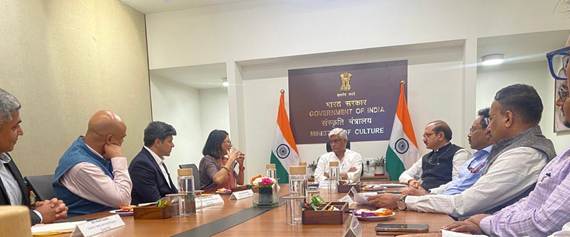
The Ministry signed a Memorandum of Understanding with Google India Pvt. Ltd. aimed at strengthening the digital promotion of Indian destinations through artificial intelligence, data-driven insights and capacity building. Union Minister for Tourism and Culture Gajendra Singh Shekhawat exchanged the MoU in New Delhi, with the ceremony attended by Tourism Secretary Bhuvnesh Kumar, Additional Secretary and Director General (Tourism) Suman Billa, and Google India Country Manager and Vice President Preeti Lobana.
The agreement is structured as a non-commercial, non-binding and non-exclusive collaboration, carrying no financial obligations for either party. Its scope covers four broad areas:
- Digital tourism promotion — using Google’s platforms to raise the visibility of Indian destinations, experiences and cultural heritage among both domestic and international travellers.
- Data and insights — tapping Google’s understanding of global travel trends and traveller behaviour to shape more evidence-based promotional campaigns under the Incredible India brand.
- Capacity building — training programmes for Ministry officials covering digital marketing tools, campaign optimisation, content creation and emerging AI applications.
- Technology-led visitor engagement — exploring immersive digital formats to showcase India’s cultural and natural heritage to global audiences.
Shekhawat framed the tie-up as part of a broader push to position India as a modern, accessible and globally competitive destination, with digital tools intended to change how travellers discover and engage with the country’s heritage sites even before they arrive.
Trade angle: For destination marketing organisations and inbound operators, this points to sharper, insight-backed promotional campaigns from the Ministry over the coming months — and potentially better access to aggregated travel-trend data that trade bodies can use for their own market planning.
NITI Aayog Report: A Regulatory Roadmap to Ease Doing Business
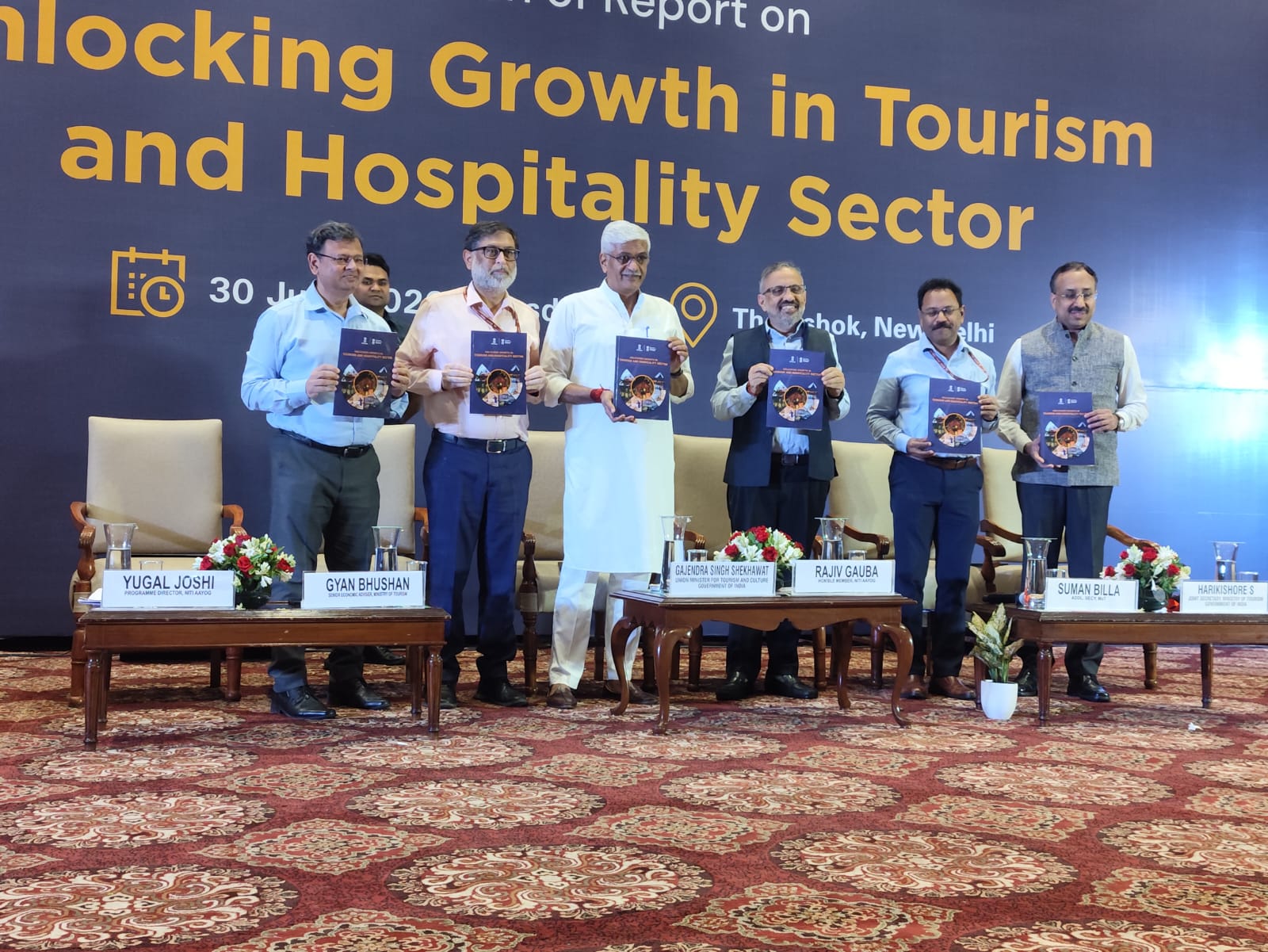
Hours later, at a National Workshop in New Delhi, the Ministry of Tourism and NITI Aayog jointly released a report titled Unlocking Growth in Tourism and Hospitality Sector. The report was launched by Shekhawat, NITI Aayog Member Rajiv Gauba, Secretary Bhuvnesh Kumar and Additional Secretary Suman Billa.
Unlike the Google MoU, this report is squarely about the operating environment for tourism businesses. It is based on a detailed assessment of the regulations governing:
- Accommodation providers and hospitality establishments
- Homestays
- Food and beverage services
- Tour operators
- Tourism infrastructure projects
From this review, the report identifies regulatory bottlenecks that are currently affecting investment decisions, project implementation timelines, accommodation capacity expansion and coordination between government departments. Its recommendations centre on simplifying regulatory and approval processes, cutting compliance burden, improving inter-departmental coordination, expanding accommodation capacity, and creating a more enabling environment for private investment and faster infrastructure development.
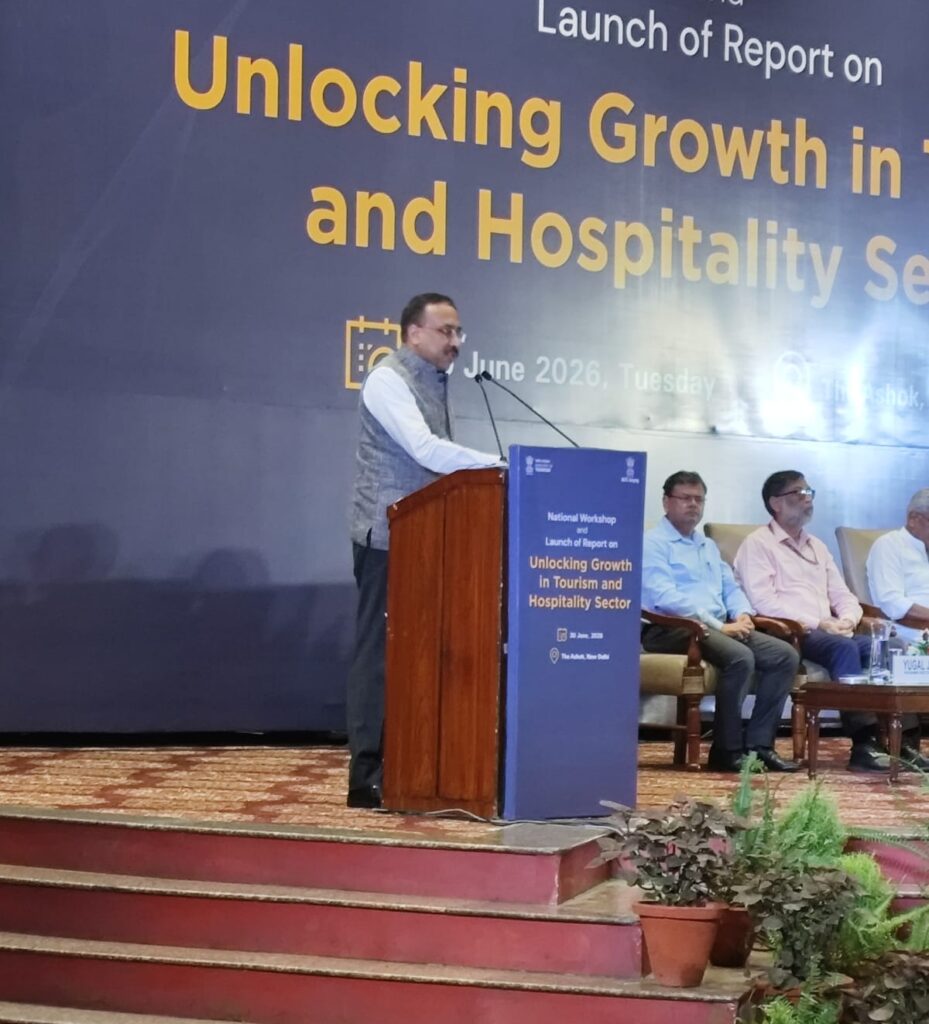
Speakers at the workshop stressed the need for coordinated action between the Centre, State governments and industry stakeholders — not just to ease business operations, but also to strengthen tourism infrastructure, support local livelihoods, encourage community participation and advance sustainable tourism practices. The report is explicitly positioned within India’s Viksit Bharat 2047 vision, linking tourism reform to broader goals of economic growth, employment generation and regional development.
Notably, the workshop’s attendee list reads like a cross-section of the trade itself: representatives of State governments, industry associations, hospitality stakeholders, online travel platforms, academic institutions and knowledge partners were all part of the discussion, alongside central ministries. Topics on the table included tourism investment, regulatory reform, accommodation capacity, and environmental sustainability.
The full report has been made publicly available via NITI Aayog’s website.
Trade angle: This is the more consequential document for operators and investors. A regulatory roadmap that specifically targets homestays, F&B services, tour operator licensing and infrastructure approvals suggests the sector may see follow-on policy action — worth tracking closely for anyone planning capacity expansion or new market entry in India.
The Bigger Picture
Taken together, the two announcements suggest a two-track strategy: use Google’s reach and AI capabilities to sharpen how India is marketed to the world, while simultaneously trying to fix the regulatory friction that has historically slowed investment and capacity growth on the ground. For B2B travel and trade stakeholders, the near-term takeaway is to watch for two things — how the Google partnership translates into actual campaign or data-access opportunities, and whether the NITI Aayog report’s recommendations move from paper to policy in the months ahead.
Category:
News and Updates
Most Recent






Advertisments