
Advertisment

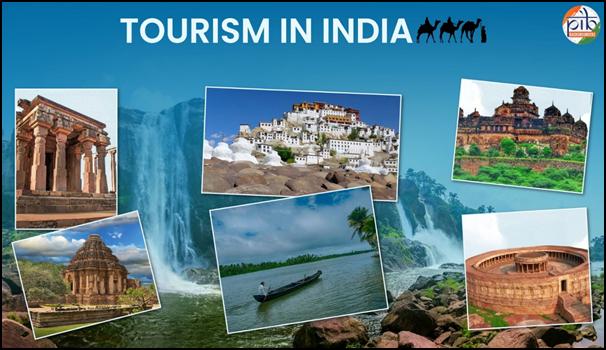
Tourism is far more than an industry of travel and leisure. It is a powerful catalyst for economic growth, employment generation, and cultural exchange. Every journey undertaken by a traveller creates opportunities across a wide network of livelihoods, benefiting hotels, transport operators, tour guides, artisans, restaurants, and countless local enterprises. As visitors explore destinations, they contribute directly to local economies, fostering prosperity and entrepreneurship at the grassroots level.
In a country as diverse and culturally rich as India, tourism serves as a vital driver of regional development. It channels investments into emerging and remote destinations, generates sustainable livelihood opportunities for local communities, and brings India’s vibrant heritage, traditions, and natural beauty to a global audience. Beyond its economic impact, tourism strengthens cultural understanding, promotes people-to-people connections, and reinforces India’s soft power on the world stage.
From the bustling cities and revered pilgrimage centres to serene villages, pristine coastlines, majestic mountains, and ecological hotspots, tourism is playing an increasingly significant role in shaping our country’s development trajectory. During the past decade, the sector has witnessed renewed momentum through transformative policy initiatives, enhanced connectivity, infrastructure and focused destination development. Today, tourism stands at the intersection of economic progress and inclusive growth.
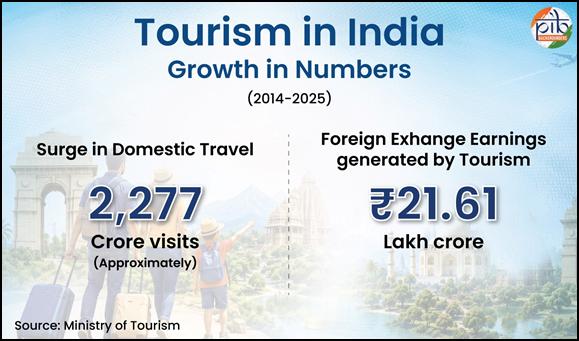
From 2014 to 2025, India recorded 181.25 million international arrivals and 93.35 million foreign tourist arrivals. International arrivals represent the total number of visitors entering India, including both foreign nationals and non-resident Indians (NRIs). In contrast, foreign tourist arrivals include only foreign nationals who visited the country during the same period.
Expanding highways, modernised railway stations, and improved connectivity are making destinations more accessible than ever, strengthening tourism’s contribution to the vision of Viksit Bharat@2047.
Revitalising Infrastructure through Swadesh Darshan
Every memorable travel experience begins long before a visitor reaches their destination. Smooth well-connected roads, accessible public spaces, quality accommodation and modern visitor facilities often shape how destinations are experienced and remembered. Recognising the transformative role of quality infrastructure, the Government embarked on an ambitious effort to strengthen tourism destinations across the country.
The introduction of the Swadesh Darshan and PRASHAD schemes in 2014 marked a paradigm shift in India’s approach to tourism development. Moving beyond fragmented interventions, these initiatives focused on developing world-class tourism infrastructure at scale, across a diverse range of destinations.
The objective of the Swadesh Darshan scheme is to develop tourism infrastructure in the country. Under the first phase of the scheme, 76 projects were sanctioned with an investment of over ₹5,000 crore across 15 tourist circuits nationwide. Of these, 75 projects have been physically completed, resulting in improved visitor amenities, enhanced connectivity, and strengthened tourist facilitation infrastructure.
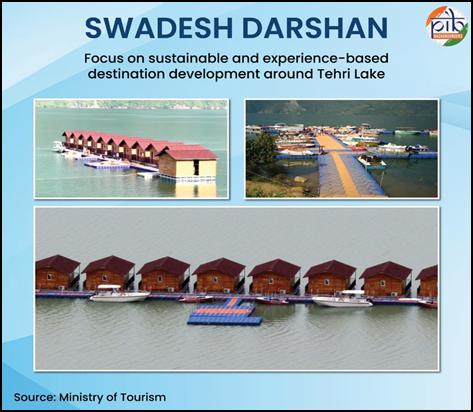
Building on this momentum, the Government introduced Swadesh Darshan 2.0 in 2022, placing greater emphasis on sustainable and experience-based destination development. The initiative aims to transform destinations into immersive tourism hubs that offer unique and memorable experiences to visitors. Notable interventions include floating Log huts around the Tehri Lake in Uttarakhand, creating distinctive lakefront experiences. In Kurukshetra, Haryana, thematic attractions based on the Mahabharata have been developed to enrich the visitor experience through immersive storytelling and cultural interpretation.
Across India, journeys of faith continue to draw millions of pilgrims every year. These sacred travels do more than deepen spiritual connections. They sustain local livelihoods, support traditional crafts and enterprises, and serve as important drivers of regional economic growth.
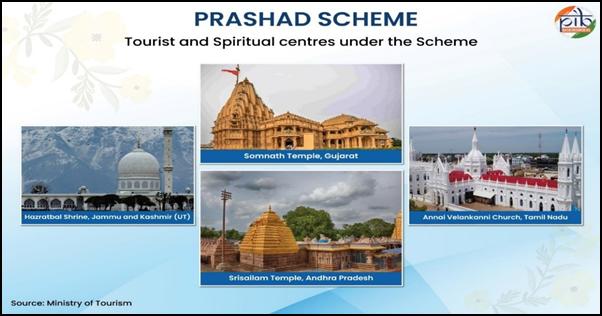
Recognising the transformative potential of spiritual tourism, the PRASHAD scheme has reshaped the pilgrimage landscape by sanctioning 54 projects worth more than Rs. 1700 crore across India. These integrated developments have significantly improved convenience and safety at high-footfall spiritual destinations such as Somnath, Srisailam, and the holy Govardhan in Uttar Pradesh.
Tourism development is also being woven into broader national priorities. Increasingly, it is being aligned with initiatives aimed at unlocking the potential of the North East, promoting rural tourism, and advancing the developmental aspirations of the Purvodaya States. Recent Union Budget announcements have further reinforced this vision through provisions for the upkeep and development of iconic tourist centres and destinations. These investments are not only enhancing tourism infrastructure but also generating employment, stimulating local economies, and creating new opportunities for communities in emerging tourism regions.
As one of India’s most resilient and vibrant tourism segments, spiritual tourism continues to play a pivotal role in driving inclusive growth. By improving pilgrimage infrastructure and enriching visitor experiences, these initiatives are ensuring that the benefits of tourism reach local communities while preserving the country’s rich spiritual and cultural heritage.
Special Assistance to States for Capital Investment (SASCI)
Further reinforcing its infrastructure-led tourism strategy, the Government operationalised the Special Assistance to States for Capital Investment (SASCI) – Development of Iconic Tourist Centres to Global Scale, following the announcement in the Budget 2024-25 announcement. Designed to transform high-potential destinations into world-class tourism hubs, the programme seeks to enhance visitor experiences, strengthen destination competitiveness, and unlock local economic opportunities. Under this initiative, 40 projects across 23 States with an outlay of ₹3,295.76 crore have already been sanctioned, underscoring the Government’s commitment to creating globally benchmarked tourism destinations.
Sustainability, Conscious Travel, and Managing Overtourism
As tourism grows, sustainability has become central to the sector’s long-term growth. Preserving natural ecosystems, cultural heritage, and local traditions is essential to ensuring that future generations can continue to experience and benefit from India’s rich tourism assets.
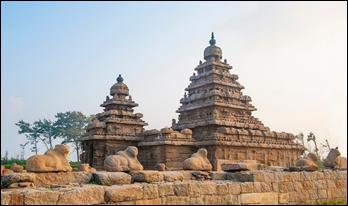
To address the challenges of overtourism at popular destinations, the Government is promoting a diversified tourism landscape through the development of niche tourism products. Initiatives such as Himalayan trekking trails, birdwatching circuits, and curated turtle tourism experiences are helping distribute visitor flows while creating new opportunities in lesser-known destinations. Sustainability is being further prioritised through the Travel for LiFE program, which encourages tourists, businesses and local communities to adopt environmentally responsible practices and make conscious choices that minimise their ecological footprint.
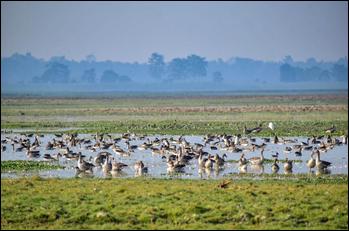
India’s commitment to sustainable tourism is also gaining global recognition. Mamallapuram recently became the first UNESCO World Heritage site in South Asia to achieve the prestigious Green Destinations Silver global certification, setting a benchmark for responsible destination management. Complementing these efforts, the Challenge-Based Destination Development (CBDD) initiative has sanctioned 38 projects worth ₹697.94 crore under the spiritual and eco-tourism categories. Examples include the Panidihing Bird Sanctuary in Assam and the reservoir eco-tourism project at Nizam Sagar, located in Telangana. Together, these initiatives are fostering a tourism model that balances economic growth with environmental sustainability and cultural preservation.
Global Competitiveness and Technological Integration
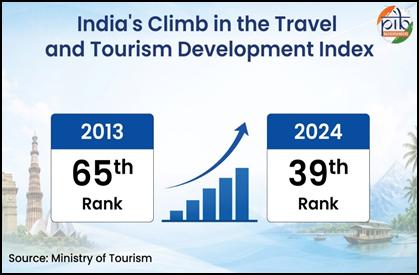
In an increasingly interconnected world, tourism is shaped by seamless mobility, digital innovation, and global visibility. Recognising these shifts, India has spent the past decade strengthening the foundations of its tourism ecosystem, enhancing connectivity, improving ease of travel, and expanding its international outreach. These efforts have steadily elevated the country’s standing in the global tourism landscape. The progress is reflected in international rankings. In 2024, India recorded 20.6 million international arrivals, securing the 20th position globally, compared to the 25th rank in 2016.
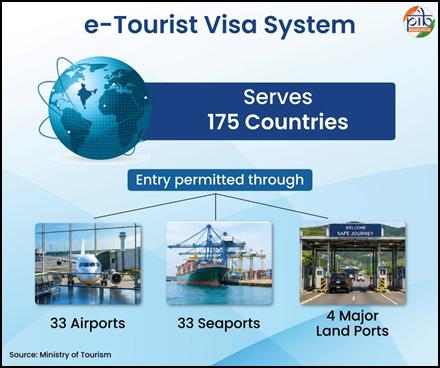
Travel to India has become easier and more convenient through a series of digital and policy reforms, especially the e-Tourist Visa system. Digital platforms such as NIDHI and NIDHI Plus have also streamlined registration and business processes for accommodation providers and travel agents across the country. This is contributing to a more efficient and transparent tourism ecosystem.
Tourism has also emerged as a powerful tool of global engagement. India’s G20 Presidency showcased the country’s diverse destinations, rich heritage, vibrant crafts, and living cultural traditions to an international audience. Beyond strengthening India’s global image and soft power, the event highlighted the country’s growing capabilities as a premier destination for MICE tourism – Meetings, Incentives, Conferences, and Exhibitions. By bringing global leaders to destinations across the country, it demonstrated the potential of tourism not only as an economic driver but also as a bridge for international cooperation and cultural exchange.
Empowering Human Capital and Future Aspirations
Every memorable journey is ultimately shaped not only by the places visited but also by the people who bring those destinations to life. From skilled guides and hospitality professionals to artisans, transport providers, and local entrepreneurs, tourism is powered by a vast network of individuals whose skills and services enrich the visitor experience. Recognising this, India’s tourism strategy places equal emphasis on developing human capital alongside physical infrastructure.
This vision was reinforced by Prime Minister Narendra Modi’s recent call for austerity, encouraging citizens to choose domestic tourism and support local livelihoods, artisans, and small businesses across the country.
Strengthening the tourism workforce remains a key priority for the Government. Between 2014 and 2025, more than 4.5 lakh persons were trained under the Capacity Building for Service Providers scheme, enhancing service standards and employability across the sector. The Union Budget 2026–27 has further advanced this agenda through proposals for a National Institute of Hospitality and the upskilling of 10,000 tourist guides at iconic destinations.
India’s tourism ambitions extend beyond just attracting visitors. The country is steadily positioning itself as one of the world’s leading tourism destinations. Ranked 8th among the world’s top tourism economies, it contributes US $231.6 billion to the national economy. The World Travel & Tourism Council (WTTC) projects India will rise to the 4th place globally over the next decade, reflecting its growing influence in the global tourism landscape. Travel facilitation is being strengthened through the significant expansion of the e-Visa system, making India more accessible to visitors from a large number of countries.
The transformation is already visible on the ground. Over the last decade, more than 100 destinations have been upgraded through various tourism infrastructure schemes, resulting in a significantly improved visitor experience. The proposed development of 50 key destinations will further enhance destination quality, amenities, and tourism readiness.
Improved highways, modern airports, UDAN connectivity, Vande Bharat trains, railway modernisation, and stronger last-mile connectivity are making travel easier than ever before. As destinations become more accessible, new opportunities are emerging for local communities and tourism enterprises.
India’s international tourism outreach is likewise entering a new phase. A revitalised Incredible India campaign has enhanced digital promotion, participation in international travel marts, roadshows, and strategic partnerships, strengthening the country’s presence in key source markets. Together, these efforts are laying the foundation for a tourism sector that is more resilient, more inclusive, and more globally competitive.
As India advances towards its vision of becoming a leading global tourism destination, the focus is on creating meaningful experiences, generating livelihoods, preserving heritage, empowering communities, and ensuring that tourism serves as a catalyst for sustainable and inclusive growth. The journey of India’s tourism transformation is well underway—and its next chapter promises to be even more ambitious.
Category:
News and Updates
Most Recent





Advertisments

Advertisments
Trending