
Advertisment

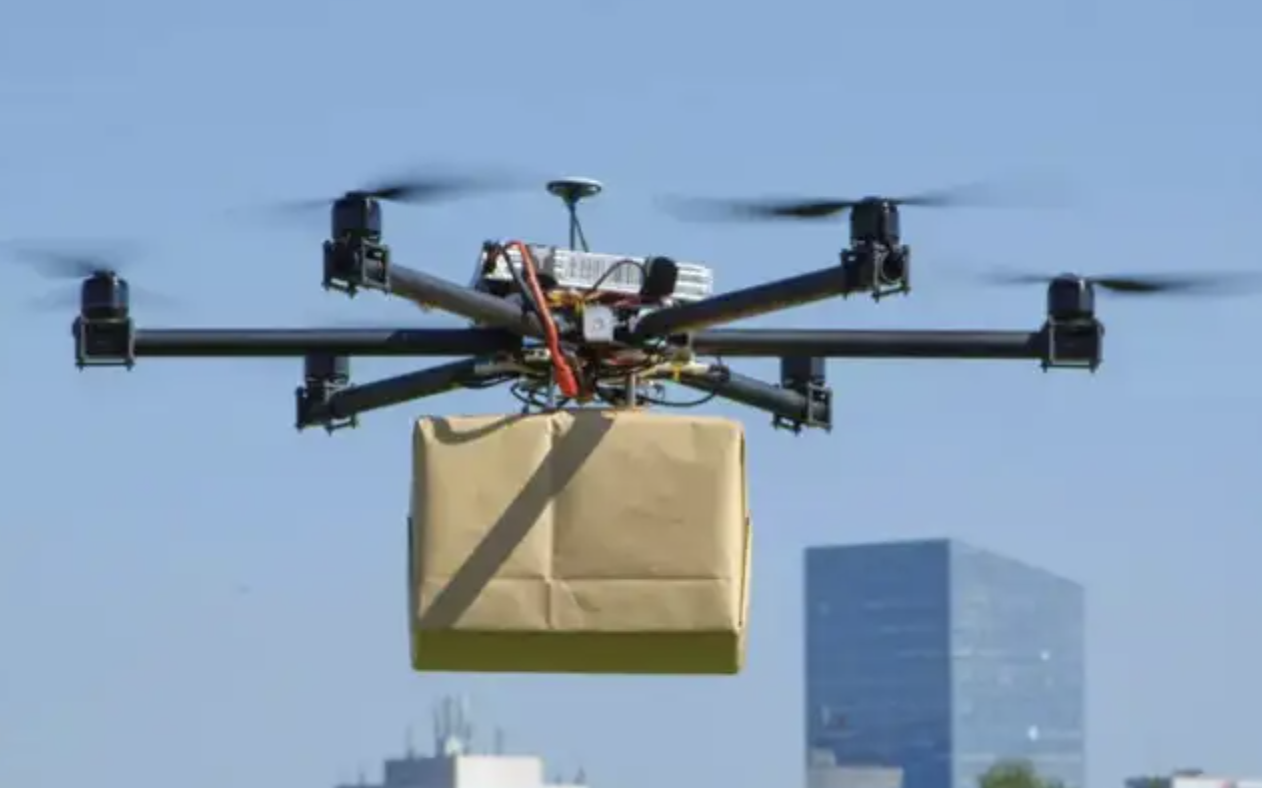
As 2025 draws to a close, India’s logistics sector is clearly shifting how it builds last-mile delivery. Drone logistics—once limited to controlled pilots and niche use cases—has moved decisively into scaled, repeatable operations, becoming an increasingly important layer within urban fulfilment networks. This transition mirrors a broader global pattern: by the end of 2025, drone delivery operations worldwide have cumulatively crossed an estimated 15–20 million commercial deliveries, led by the United States, select European corridors, and fast-scaling Asian markets.
While sharing the views on 2025, Mr Ankit Kumar, CEO & Founder, Skye Air, said, “Over the course of the year, drone delivery volumes in India expanded steadily, reflecting rising adoption by e-commerce platforms, logistics providers, and quick-commerce players. What stands out in 2025 is not just growth in shipment numbers, but the diversification of categories being serviced. Beyond essentials, drones began supporting higher-value and time-sensitive segments, including vertical quick-commerce categories such as fashion and beauty—signaling broader commercial confidence in aerial delivery models. Globally, a similar shift has been underway, with operators in the U.S., Australia, and parts of Europe reporting that non-medical and non-emergency deliveries now account for over one-third of active drone delivery volumes, compared to being marginal just two years ago.”
He also added, “Another defining development of 2025 has been the evolution of deployment strategies. Rather than pursuing blanket city-wide launches, operators focused on pin-code–led expansion in high-demand urban clusters, improving unit economics and operational reliability. NCR remained a key hub, while southern markets such as Bengaluru emerged as strategic expansion zones, laying the groundwork for further metro rollouts.” This approach aligns with global best practices: mature drone markets such as the U.S. and Australia have shown that cluster-based, repeat-route deployments deliver meaningfully higher asset utilization and lower per-drop costs than dispersed pilots.
From an industry standpoint, FY25 closed with over 2 million drone deliveries nationwide in India. In contrast, global delivery volumes continued to scale across healthcare, food, retail, and quick-commerce use cases. In the U.S. alone, operators executed several million routine drone deliveries during the year, supported by regulatory approvals for beyond-visual-line-of-sight (BVLOS) operations. Capacity planning across major global operators now points toward tens of millions of annual drone deliveries worldwide within the next two to three years, as fleets, automation, and airspace integration mature.
This operational maturity has coincided with growing interest from logistics partners and infrastructure-focused investors globally, reinforcing drones’ position as a long-term logistics infrastructure layer rather than an experimental add-on. Capital deployment discussions in 2025 increasingly centered on cost per delivery, SLA reliability, and systems integration—clear signals that drone logistics has entered its execution phase.
The key takeaway from 2025 is clear: drone deliveries have transitioned from proof-of-concept to practical deployment, both in India and globally, and now actively reshape how last-mile logistics teams design for speed, scalability, and urban efficiency.
“What 2025 demonstrated—across India and global markets alike—is that drone delivery is no longer about testing what’s possible, but about scaling what already works.” Mr Kumar added.
For more news visit our site: Click here
Tags:
BVLOS Drones
Drone Logistics India
E-commerce Delivery
Last Mile Delivery
Skye Air
Urban Logistics
Year-Ender 2025
Category:
News and Updates
Most Recent






Advertisments