Advertisment

Under the visionary leadership of Deputy Chief Minister Diya Kumari, Jaipur’s Teej Festival becomes a vibrant expression of feminine power, cultural revival, and progressive tradition.
Jaipur –
“Yatra naryastu pujyante, ramante tatra devataḥ…”
Where people revere women, the gods reside. This ancient Vedic verse came alive in the historic streets of Jaipur during the grand procession of Teej Mata, transforming the annual celebration into a magnificent tribute to womanhood, creativity, and cultural pride.
The 2025 Edition of Teej was not just a festival—it became a movement. It was a celebration where a woman Deputy Chief Minister, women priests, women entrepreneurs, and the divine feminine embodied in Teej Mata came together to form the four pillars of a new cultural narrative in Rajasthan.

A Festival of Leadership, Ritual and Feminine Devotion
This year’s Teej celebrations, held on July 27–28, were distinguished not only by their grandeur but by their message. Led by Deputy Chief Minister and Tourism Minister Diya Kumari, the festival reflected a profound shift—women were no longer just spectators; they were the creators, curators, and central figures in every aspect of the event.
For the first time in 298 years, women priests performed the sacred aarti of Teej Mata in the royal procession. Female entrepreneurs inaugurated the Teej Fair, while cultural tableaux designed by women adorned the city’s streets, transforming tradition into a celebration of change.

A Moving Legacy, Redefined
The royal procession of Teej Mata began at the Zenana Deorhi of City Palace, passing through Tripolia Gate, Chhoti Chaupad, and Chogan Stadium, and concluded at Pondrik Udyan. It was a living, moving heritage pageant featuring ornately decorated elephants, camels, horses, royal buggies, and hundreds of folk performers—many of them women—representing every hue of Rajasthan’s cultural richness.
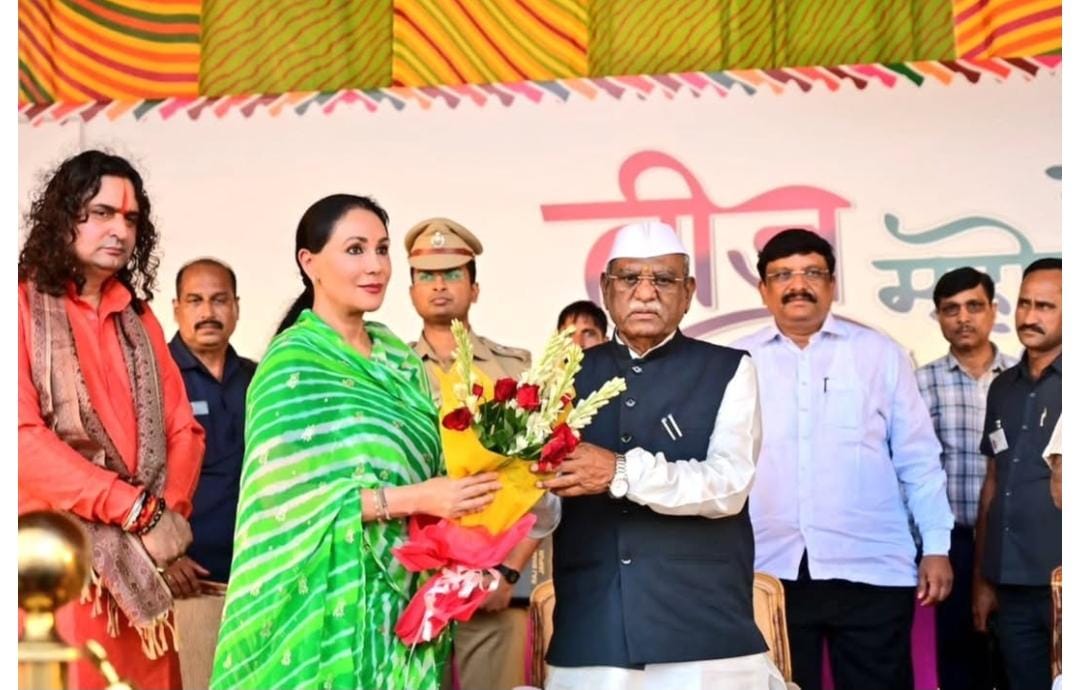
Deputy CM Diya Kumari herself participated in the grand aarti held at Chhoti Chaupad, sharing the stage with Governor Haribhau Bagde, Speaker Vasudev Devnani, and Uttarakhand’s Tourism Minister Satpal Maharaj, in the presence of both Indian and international visitors.

Lahariya and the Language of Colourful Empowerment
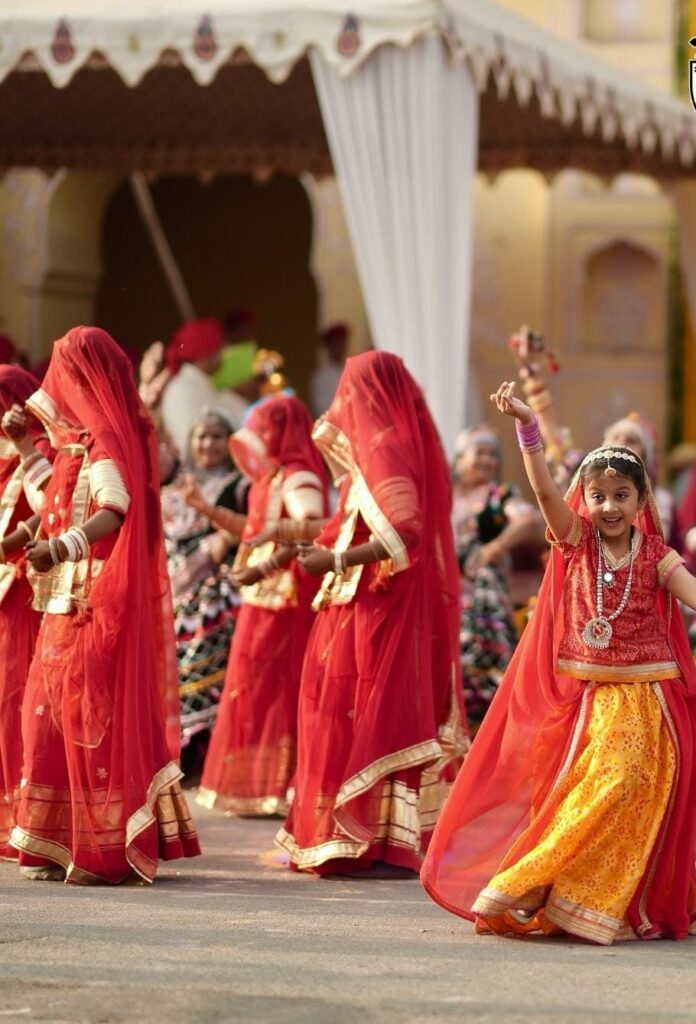
Among the many highlights were the vibrant women’s tableaux, where women adorned in colourful lahariya saris, balancing sacred pots on their heads, danced and sang through the streets. These weren’t merely visual displays—they were poetic expressions of devotion, tradition, and empowerment.
Traditional performances, such as Kalbeliya, Ghoomar, Chari, Kachhi Ghodi, Puppetry, and Hela Khyal, infused the procession with the musical and rhythmic soul of Rajasthan, enchanting even international tourists, who responded with spontaneous applause and delight.

A Historic Moment: For the first time, participants conducted the ‘Maha Aarti’ of Teej Mata at Chhoti Chaupad, where they celebrated with showers of flower petals and the sounds of royal band music. The entire ceremony was broadcast live across more than 200 public screens throughout Rajasthan, making the spiritual and cultural spectacle accessible to all.
Adding a touch of royal heritage, Padmanabh Singh of the former Jaipur royal family performed aarti at Tripolia Gate, symbolising the unity of tradition and inclusiveness.

Pondrik Park: The Fairground of Culture and Enterprise
The concluding destination of the Teej procession, Pondrik Udyan, transformed into a celebratory hub of culture and women-led enterprise. A vibrant Teej Fair took place over both days, with over 15 stalls set up by local women entrepreneurs showcasing handicrafts, lahariya textiles, terracotta items, mirror-work art, and eco-friendly home products.
Each evening featured a cultural extravaganza from 8–9 PM, including:
• Terahtali bhajans,
• Ghoomar,
• Kalbeliya and Bhawai dance,
• Kathak performances, and
• Soulful renditions by female folk singers.
With swings, henna corners, and traditional cuisine, Pondrik Park came alive as a festive chaupal, drawing locals and tourists alike into a shared experience of Rajasthan’s living traditions.

A Cultural Manifesto, Not Just a Festival
The 2025 Teej celebration under Diya Kumari’s leadership proved that tourism, tradition, and empowerment are not mutually exclusive. It was not merely a commemoration of heritage, but a cultural manifesto.
This festival showed that tradition can evolve without eroding, and that rituals, when inclusive, can reflect a modern social conscience.
Jaipur’s Teej this year didn’t just worship Teej Mata—it honoured every woman who embodies faith, strength, and beauty.
It echoed!
For more news visit our site: Click here
Tags:
Cultural Festival
Diya Kumari
Indian Tradition
Jaipur
Rajasthan Tourism
Teej Festival
tourism
travel
Woman Empowerment
Category:
News and Updates
Most Recent






Advertisments