
Advertisment


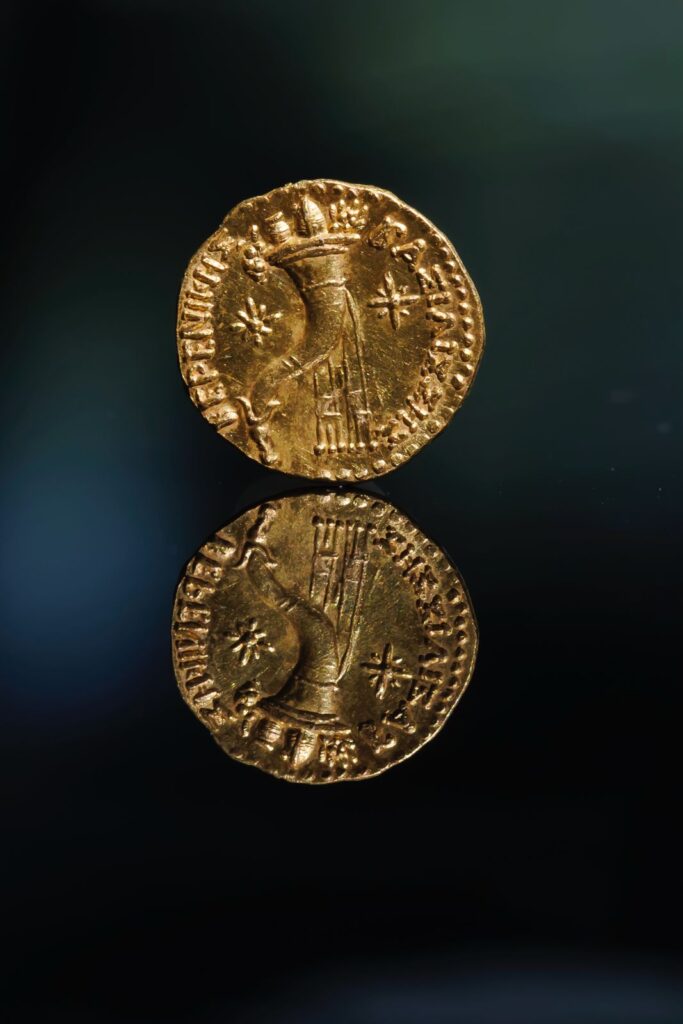
A rare gold coin of the Hellenistic Queen Berenice II of Egypt, dating back about 2,200 years, has been uncovered in excavations at the City of David. This unique coin, made of pure gold, is thought to have been minted as part of a special series intended as donatives to soldiers. Only about twenty of these coins exist worldwide, and archaeologists discovered this one during a controlled excavation, marking it as the first of its kind found in such a setting.
The discovery challenges previous assumptions that Jerusalem, following the destruction of the First Temple, was a small, marginal, and economically weak town. Together with other finds from the excavation, the coin sheds new light on the city’s significance during the Hellenistic period. The rare piece will be displayed to the public in early September during the annual City of David Research Conference.

The coin was found in the Givati Parking Lot excavations within the City of David National Park, conducted by the Israel Antiquities Authority. It is a small quarter-drachma denomination, made of pure gold (99.3%), dated to 246–241 BCE and minted for Queen Berenice II during the reign of her husband Ptolemy III, ruler of Hellenistic Egypt. The obverse depicts Berenice as a queen, adorned with a diadem, veil, and necklace. At the same time, the reverse carries a cornucopia, an ancient symbol of prosperity and fertility, flanked by two stars, with the Greek inscription reading “of Queen Berenice.”
The find was made during soil sifting near the excavation area by Rivka Langler, an excavator at the Givati Parking Lot, who described her excitement: “I was sifting the excavation soil when suddenly I saw something shiny. I picked it up and realised it was a gold coin. At first, I couldn’t believe it, but within seconds, I was running excitedly through the excavation site. I’ve been excavating in the City of David for two years, and this is the first time I’ve found gold. I always saw others discovering special finds, and I kept waiting for my moment – now it finally arrived.”

According to Dr. Robert Kool, Head of the Numismatics Department at the Israel Antiquities Authority, and Dr. Haim Gitler, Chief Curator of Archaeology and Curator of Numismatics at the Israel Museum, “As far as we know, the coin is the only one of its kind ever discovered outside Egypt, the centre of Ptolemaic rule. Only about twenty such coins are known, and this is the first ever uncovered in a controlled archaeological excavation, making it of extraordinary scientific importance.”
The inscription “BASILISSES of the Queen” is considered rare for coins of the time. Berenice appears here not as a mere consort, but possibly as a ruler in her own right. While women occasionally appeared on Ptolemaic coins over the dynasty’s 300-year span, most famously Cleopatra, this is among the earliest known instances of a Ptolemaic queen depicted with such a title during her lifetime, indicating her exceptional status and political authority.

Experts suggest the coin was minted in Alexandria, Egypt, likely as a bonus for soldiers returning from the Third Syrian War between the Ptolemaic Kingdom of Egypt and the Seleucid Kingdom of Syria.
Yiftah Shalev, director of the excavation on behalf of the Israel Antiquities Authority, along with Efrat Bocher of the Centre for the Study of Ancient Jerusalem, explained: “The fact that such a rare gold coin was discovered in Jerusalem during the Ptolemaic period provides a fascinating glimpse into the city’s status at the time, and its possible ties with the Ptolemaic Empire. The coin has broad implications for understanding Jerusalem’s development after the destruction of the First Temple. While it was long believed that Jerusalem in this era was economically weak, the evidence now suggests that already in the Persian period the city began recovering and by the Ptolemaic rule had grown stronger, reconnecting with key political, economic, and cultural centres of the age.”
Israel’s Minister of Heritage, Amihai Eliyahu, added: “Jerusalem never ceases to surprise. This rare coin from the City of David may be a small find, but it carries great significance for our understanding of the city. Excavations in the City of David reveal entire chapters of Jerusalem’s history, from the glorious days of the Kingdom of Judah to the time after the destruction of the First Temple and the exile. After 2,000 years, we have returned to our capital, and now we are privileged to uncover its rich past.”
The discovery of the coin, alongside other gold jewellery unearthed in the Givati Parking Lot excavation, will be formally presented at the 26th Annual City of David Research Conference in early September.
For more news visit our site: Click here
Tags:
City of David excavations
Hellenistic period Jerusalem
Israel Antiquities Authority
Ptolemaic Egypt coins
Queen Berenice II
rare gold coin discovery
Category:
News and Updates
Most Recent






Advertisments