
Advertisment

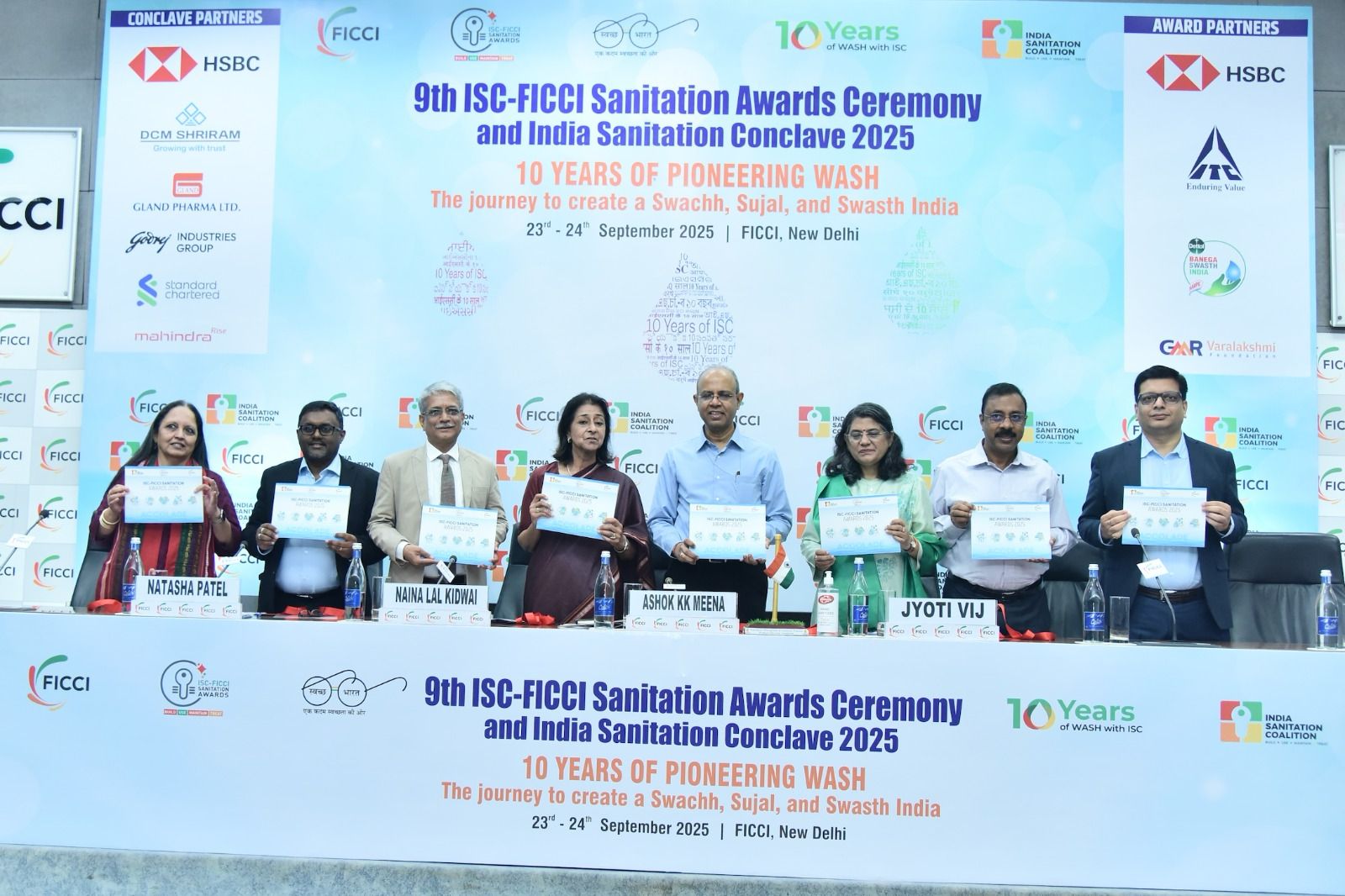
Phase II of SBM-G focused on the ODF Plus model, including solid and liquid waste management. The industry should focus on the waste-to-wealth model, says CR Patil.
“Need to ensure sanitation and hygiene become inseparable from India’s growth story, particularly in the tourism sector” — Gajendra Singh Shekhawat.
Mr CR Patil, Minister of Jal Shakti, Government of India, today emphasised that the role of industry and institutions is crucial in achieving the goal of a Viksit Bharat by 2047.
Addressing via video message at the ‘9th ISC-FICCI Sanitation Awards & India Sanitation Conclave 2025’, Mr Patil applauded the efforts of India Sanitation Coalition under the ‘WASH’ category in the last 10 years. “Under the leadership of Hon’ble Prime Minister Shri Narendra Modi, ‘Swachhta’ today has become a Jan Andolan. Under the Swachh Bharat Mission-Gramin (SBM-G), more than 12 crore toilets have been built so far in the country,” he added.
Mr Patil emphasised that the second phase of SBM-G focuses on the ODF Plus model, which integrates both solid and liquid waste management to create ODF Plus model villages. “Swachhta is not just about cleanliness, but it is also about the dignity of people and their health. It is through the collective efforts of the government, industry, and institutions that we can help achieve the vision of a clean and healthy India. I urge industry and institutions to direct their focus towards adopting a waste-to-wealth model to provide solutions required by the sector,” he highlighted.
Mr Gajendra Singh Shekhawat, Minister of Culture and Tourism, Govt of India, addressing through video message, said that India today stands proudly as one of the most vibrant and fastest-growing tourist destinations in the world. “If India wishes to continue its rise as a global tourism hub, then sanitation cannot remain merely a health or infrastructure agenda. It must become an integral part of tourism development, a clean and well-managed environment at our temples, monuments, beaches, wildlife sanctuaries, and cities is not only essential for public health but also for creating memorable visitor experiences,” he added.
Mr Shekhawat further stated that these initiatives are crucial; by transforming heritage and tourist sites with modern sanitation, waste management and hygiene practices, we are turning them into models of sustainability and national pride. “The road ahead involves both innovation and responsibility. The coming decade must focus on scaling up innovative solutions, including faecal sludge treatment plants in small towns, plastic waste management systems at popular places, and behavioural change campaigns. We need to ensure that sanitation and hygiene become inseparable from India’s growth story, particularly in tourism, because a clean India is the true face of our incredible India,” he emphasised.
Mr Ashok KK Meena, Secretary, Department of Drinking Water and Sanitation, said that as India moves forward, the government, stakeholders, and partners like ISC-FICCI are working towards ensuring that all villages become ‘Swachh, Sujal and Swasth’ villages. “We are in the process of designing the criteria and the vision of Swachh, Sujal and Swasth village, as it will play an essential role in taking us to achieve the vision of Viksit Bharat in 2047. The initiative aims to uphold dignity and respect for every individual, ensure safe sanitation and healthcare, and build a healthier and more equitable India.
The path forward, he said, will require a focus on stronger community participation, local government involvement, and the greater use of low-cost but effective technology and climate-smart solutions. “Robust operations and maintenance systems for water supply and sanitation will be essential,” he added.
Padma Vibhushan Dr R.A. Mashelkar, Chair of the Awards Jury, stated that the Swachh Bharat Mission Phase-III carries forward the vision of sustaining India’s Open Defecation Free (ODF) status, as envisioned by our Hon’ble Prime Minister. It aims to transform villages and cities into garbage-free spaces, embed technology in waste management, ensure the dignity of Swachh Mitras, and promote behavioural change for a cleaner and brighter tomorrow, he added.
Ms Naina Lal Kidwai, Chair, India Sanitation Coalition and Past President, FICCI, said that India’s rapid urbanisation has amplified pressures on its cities. “With nearly one-third of India’s population living along the coasts, which also account for 60 per cent of the nation’s FDI inflows, strengthening the resilience of coastal cities is not just an environmental necessity but also an economic imperative,” she added.
Ms Jyoti Vij, Director General, FICCI, said, “India Sanitation Coalition (ISC) today stands at the heart of the WASH ecosystem in India and continues to grow stronger, bringing together government bodies, corporates, academic institutions, and development partners as collaborators who can drive impact to the very last mile. People view sanitation not just as infrastructure but also as a pathway to dignity, health, and economic growth. FICCI has amplified ISC’s initiatives while also underscoring its active role in driving social development alongside economic progress.”
Ms Natasha Patel, CEO of the India Sanitation Coalition, delivered the welcome address and moderated the session.
During the event, organisers announced the ISC-FICCI Sanitation Awards 2025 and released a compendium.
For more news visit our site: Click here
Tags:
Category:
News and Updates
Most Recent






Advertisments