
Advertisment

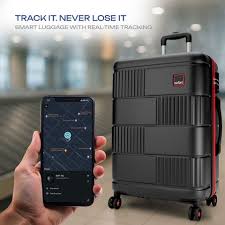
Every Traveller is familiar with the awful moment. After a tiring flight, once they land. They head over to the baggage belt. The baggage belt begins to move. You can see people collecting their bags all around and leaving. But your bag never shows up on the baggage belt, and you are left staring at the belt, filing a report with a customer service agent who has no idea about your bag.
This situation occurs way too frequently. Approximately, airlines do lose 1.8 million bags on an annual basis, which further results in handling, compensation, and recovery cost of an astonishing figure of $2 billion (16,700 Crore). Travellers bear the personal expense of misplaced medicines, professional equipment, and other essential items. As travel is expanding day by day, this scenario becomes more worse. The number of improperly handled luggage rose to 10 million in a single year, according to data by SITA.
Once luggage is more likely to go missing. If a person is travelling abroad, in comparison to domestic flights, international flights have a higher risk of luggage loss. The explanation goes straightforwardly as there are multiple handlers, complexity between airports, and narrow transfer windows. The risk increases each time a bag travels via a different airport or changes flights.
The fundamental reason? A huge lack of communication. 42% of the airlines and 34% of the airports do not exchange baggage dates. Bags cannot function when information and communication is not from both sides. This is the reason why everyone is left in the dark when luggage gets missing from tracking systems.
Passengers had been advised to wait and hope for years. However, with the change in the B2B technology, they are providing a solution for this large scale issue problem. Google’s Find Hub was incorporated by SITA, WorldTracer, a global baggage tracing platform Is used by more than 500 airlines across 2800 airports. If by any chance a suitcase is delayed, the user can use Google’s Find Hub on their phone to create a secure location share link. Through which it can provide the location of your misplaced luggage, and further, all of a sudden, airline personals can see your bags location in real time.
This isn’t just exclusive to people who use Google. The same is available For Apple Airtec customers. Be it United, Delta, Lufthansa, British Airways, Singapore Airlines, Qantas, Turkish Airlines, and Virgin Atlantic are among the eighteen major airlines that now accept AirTag location data. Passengers just have to enter their air tag Item location Straight into the delayed luggage form using the airline app or the website. Then, further Role is played by customer care representatives To get the exact location of the baggage.
However, passenger tracking is just one side of the system. Just to stop the Mismanagement before it actually happens, airlines and airports, I’m making significant investments in AI and computer vision.
In the future, common bags will become smart, networked gadgets thanks to electronic bag tags with Bluetooth and Internet of things tracking. Even before a passenger reports a bag missing, these tags enable baggage to disclose where they are during the trip. As a result, airlines, airports, and travellers ultimately collaborate in a completely integrated ecosystem. Blind spots are eliminated. No more frustrated waiting. Just quicker recuperation and real-time visibility.
The travel industry has long treated lost luggage as an unavoidable cost of doing business. But with the right technology—and a willingness to share data—that era is coming to an end. For travelers, the message is simple: your bag no longer has to disappear into the unknown. The tools to track it, find it, and bring it back are finally here.
By Tanish Mahan Gulati
Tags:
Category:
Blogs
Most Recent





Advertisments

Advertisments
Trending