
Advertisment

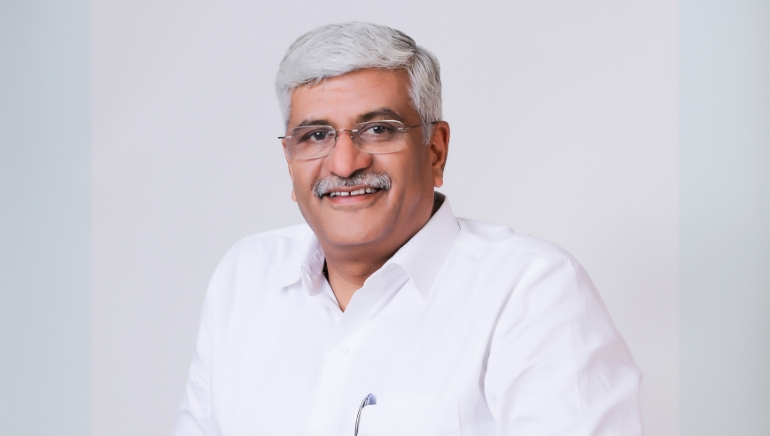
India’s Ministry of Tourism has announced a series of significant updates across infrastructure development, tourist safety, sustainable tourism, and international promotion. These developments were shared in multiple written replies by Union Minister for Tourism & Culture Shri Gajendra Singh Shekhawat in the Lok Sabha.
₹3,295 Crore Sanctioned for Development of Iconic Tourist Centres
Under the Government of India’s Special Assistance to States for Capital Investment (SASCI) scheme, 40 projects across 23 States, including Punjab, have been sanctioned at a total cost of ₹3,295.76 crore.
The objective is to develop select destinations into globally competitive iconic tourist centres, supported by branding and large-scale promotional initiatives. These projects are being implemented directly by State Governments with funds released through the Department of Expenditure.
The Ministry is not considering any new SASCI projects at this time; however, it is providing ongoing support to States and Union Territories through its flagship schemes. Swadesh Darshan (SD) – 76 projects, ₹5,290.33 crore Swadesh Darshan 2.0 (SD2.0) – 53 projects, ₹2,208.27 crore Challenge-Based Destination Development (CBDD) – 36 projects, ₹648.11 crore PRASHAD (pilgrimage circuits) – 54 projects, ₹1,726.74 crore
These schemes support States in creating high-quality tourism infrastructure, enhancing visitor experiences, and strengthening destination competitiveness.
Tourist Safety Strengthened with Dedicated Tourist Police & 24×7 Helpline.
Reaffirming that safety is a State subject, the Ministry highlighted ongoing efforts to coordinate with States/UTs to deploy dedicated Tourist Police units. To date, 15 States/UTs, including Delhi, Goa, Kerala, Rajasthan, Uttar Pradesh, Punjab, Odisha, and Madhya Pradesh, have operational tourist police units.
To support travellers—especially foreigners—the Ministry operates a 24×7 Multilingual Tourist Helpline at 1800-11-1363 / 1363, available in 12 languages, including 10 international languages.
Foreign tourists may also lodge complaints via the national CPGRAMS portal using an Indian mobile number.
The Ministry continues to encourage States to utilise the Nirbhaya Fund for women-centric safety interventions, including the Safe Tourism Destinations for Women initiative.
Sustainable Tourism Criteria Expanded; Training Initiatives Rolled Out
India’s transition toward responsible tourism took another step forward with the expansion of the Sustainable Tourism Criteria for India (STCI), covering:
Tour Operators
Accommodation Units
Beaches, Backwaters, Lakes, and Rivers
A total of 2,787 accommodation units and 1,633 tourism service providers are currently recognised under the Ministry’s sustainability commitment.
The Ministry also announced progress on the Travel for Life (TFL) programme, which promotes responsible tourism practices among travellers and businesses.
To support ecotourism and local livelihoods, the Ministry conducted 15-day training programmes for 210 individuals at Ramsar sites in Haryana, Madhya Pradesh, and Odisha, focusing on alternative livelihoods and nature-based tourism.
Swadesh Darshan 2.0 continues to drive sustainable destination development, with its CBDD sub-scheme focusing on comprehensive destination upgrades through the convergence of infrastructure, mobility, community engagement, and experience design.
Capacity Building Gains Momentum
Under the Capacity Building for Service Providers (CBSP) scheme, the Ministry has allocated ₹25 crore for FY 2025–26. This initiative aims to train youth, local communities, and tourism service providers through State Institutes of Hotel Management and other agencies.
The goal: to strengthen employability and professional standards across India’s tourism workforce.
India Highlights Tourism Strengths at World Travel Market 2025
The Ministry led a delegation of 30 stakeholders at the World Travel Market (WTM) London 2025, showcasing India’s cultural diversity, tourism products, and immersive experiences.
India’s International Tourist Arrivals (ITAs) have shown a steady resurgence post-pandemic:
2020: 63.37 lakh
2021: 70.10 lakh
2022: 143.30 lakh
2023: 188.99 lakh
2024: 205.69 lakh
Foreign Exchange Earnings (FEE) have also rebounded to ₹2.93 lakh crore in 2024.
The Ministry also shared employment data demonstrating tourism’s growing economic impact:
Tourism-supported jobs increased from 68 million in 2020–21 to 84.63 million in 2023–24.
Challenge-Based Destination Development (CBDD): A New Model for Destination Excellence
Under the revamped Swadesh Darshan 2.0, the CBDD framework encourages States/UTs to propose destinations for development based on parameters such as:
Tourism readiness
Community participation
Environmental sustainability
Institutional capacity
Destination coherence
Selected destinations receive support for integrated development—from connectivity to civic amenities, digital tools, capacity building, and experience curation.
CBDD represents a shift toward outcome-driven destination development, aiming to elevate lesser-known and high-potential destinations into world-class tourism hubs.
Conclusion: A Strong Policy Push for a New Tourism Era
The Ministry of Tourism’s latest updates reflect a multi-dimensional, forward-looking approach to tourism development—combining infrastructure investment, sustainability, safety, capacity building, and global promotion.
From strengthening iconic destinations and improving tourist safety to advancing sustainable tourism and empowering local communities, India’s tourism landscape is undergoing a structured transformation.
As States and UTs implement these schemes on the ground, and as global travel continues to rebound, India is poised to consolidate its position as one of the world’s most diverse, dynamic, and welcoming tourism destinations.
For more news visit our site: Click here
Tags:
Gajendra Singh Shekhawat
india tourism
Ministry of Tourism
SASCI scheme
Swadesh Darshan
Swadesh Darshan 2.0
Most Recent






Advertisments