
Advertisment

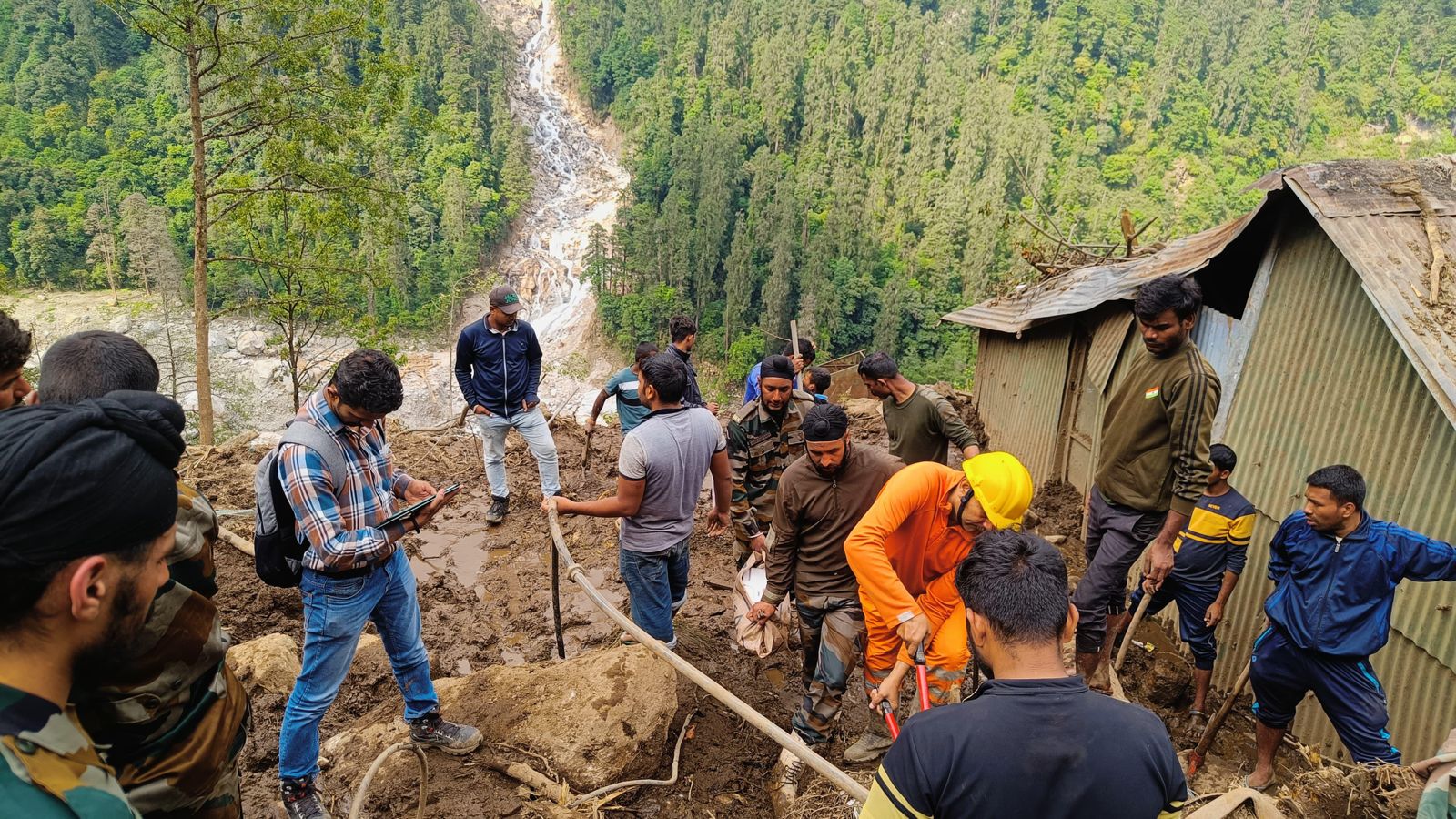
An Army rescue operation combining human effort and technology introduced a new model for disaster response in remote, high-risk areas.
The landslides that occurred in Lachen on June 1, 2025, highlighted the seriousness of the situation, which lies approximately 123 km from Gangtok. During this tragic event, three soldiers lost their lives, and six others went missing. To support the search in treacherous conditions, the Indian Army deployed a Ground Penetrating Radar (GPR) drone from BonV Aero, a deep-tech startup based in a Tier II city.
Typically, high-altitude rescue involves SDRF teams, manual digging, sniffer dogs, and ground-based GPR equipment. These are often slow and dangerous. In Lachen, however, the UAV scanned the debris from above, identifying underground anomalies that guided search teams to precise locations. The drone detected two anomalies at depths of 0.76 m and 0.015 m. Excavations at both sites confirmed the presence of human remains, eliminating the need for extensive, manual digging.
“The Indian Army’s swift deployment of our technology within 24 hours of the disaster reflects a growing trust in homegrown innovation. We are happy to see when a solution built in one part of the country is used meaningfully in another, exactly when it’s needed,” said Satyabarata Satapathy, CEO of BonV Aero.
“The emergency response in Lachen showed that startups like ours can play a vital role when timing, purpose, and national need align,” he added.
The drone transmitted real-time data to a digital map, helping rescue teams act swiftly. “Unlike thermal cameras or canine units, which fail when victims are buried deep or terrain is unstable, this drone safely scanned difficult areas without disturbing the site,” said Abinash Sahoo, CTO of BonV Aero.
For Army engineers, it offered more than aerial visuals—it delivered subsurface data, adding a critical layer to situational awareness.
For more news visit our site: Click here
Category:
News and Updates
Most Recent






Advertisments