
Advertisment

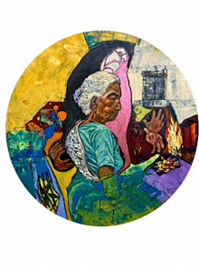
The Visual Art Gallery at India Habitat Centre, Lodhi Road, New Delhi, will host “Vanchana – Ek Vritaant,” a solo exhibition of paintings by Contemporary Visual Artist Aashima Mehrotra from 11th to 15th June 2026. Open to the public daily from 10:00 a.m. to 8:00 p.m., the exhibition presents a significant body of work that explores the nuanced emotional, social, and philosophical dimensions of human existence through a compelling visual language that is both deeply personal and universally resonant.
The exhibition will be inaugurated on 11th June 2026 at 5:30 p.m. by Shri Gajendra Singh Shekhawat, Hon’ble Union Cabinet Minister for Culture and Tourism, who will grace the occasion as the Chief Guest. The event will bring together distinguished personalities from the worlds of art, culture, governance, diplomacy, and industry, reflecting the growing recognition of art as a vital medium for dialogue, reflection, and cultural engagement.
At the heart of the exhibition lies the concept of Vanchana—a word that evokes deprivation, exclusion, longing, and the quiet ache of unfulfilled aspirations. Through a series of evocative works, Aashima Mehrotra transforms this idea into a powerful visual narrative, exploring the many forms of absence that shape human experience. The exhibition reflects upon the loss of belonging, recognition, dignity, connection, and identity, while simultaneously illuminating the resilience that emerges from such experiences. Rather than presenting deprivation solely as a condition of lack, the artist interprets it as a transformative force that compels introspection, self-discovery, and spiritual awakening.
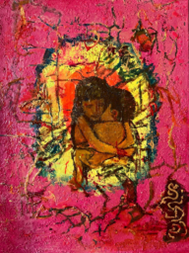
The works presented in “Vanchana – Ek Vritaant” traverse the terrains of memory, displacement, silence, hope, and renewal. Through layered imagery, symbolic forms, and textured surfaces, the exhibition creates a contemplative space where viewers are invited to reflect upon their own experiences of yearning and fulfillment. The paintings oscillate between the personal and the collective, drawing attention to emotional realities that often remain unspoken yet are universally felt. In doing so, the exhibition becomes not merely a display of artworks but a visual chronicle of contemporary human consciousness and a call for a more compassionate and equitable society—one that recognises the needs of the young, the differently abled, and senior citizens, and fosters spaces shaped by dignity, accessibility, and care.
Through a compelling series of paintings, Aashima Mehrotra explores the many forms of absence that shape human experience: the loss of belonging, recognition, dignity, affection, identity, and opportunity. Yet the exhibition does not view deprivation merely as a condition of lack. Instead, it presents it as a transformative force capable of generating introspection, resilience, self-discovery, and societal awakening.
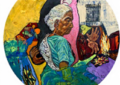
At the centre of this visual narrative stands a woman whose story is both deeply personal and profoundly universal. She is not a specific individual, but a symbolic presence representing countless lives shaped by longing, sacrifice, silence, and endurance. She embodies every individual who has waited to be seen, heard, accepted, or understood.What appears as loss gradually becomes a source of introspection for society; loneliness transforms into awareness, struggle into endurance, and disappointment into wisdom.
The darkness of nirāśā does not consume her; rather, it compels her to seek the light of āśā within.
Through this symbolic protagonist, the exhibition presents Vanchana not as an end, but as a beginning—a passage from silence to expression, from exclusion to inclusion, and from despair to renewal. The woman at the heart of the exhibition ultimately becomes a metaphor for the human spirit itself: vulnerable yet resilient, wounded yet luminous, carrying within her the quiet certainty that every experience of loss can become the seed of transformation.
Deeply influenced by spirituality, nature, cultural memory, and the complexities of human emotion, Mehrotra has developed a distinctive visual language that seamlessly integrates abstraction, symbolism, figurative expression, and mixed-media experimentation. Aashima Mehrotra is an accomplished visual artist, internationally exhibited painter, and senior officer of the Indian Railway Traffic Service (IRTS). Her artistic practice reflects a remarkable balance between the demands of public service and a lifelong commitment to creative expression. Drawing upon her experiences of leadership, observation, and human interaction, she creates works that explore aspiration, identity, relationships, and resilience.
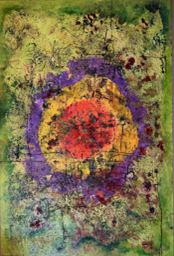
Her works have been exhibited at prestigious venues in India and abroad and form part of important private collections across the world.
Most notably, her work was selected for the National Exhibition of Art organised by the Lalit Kala Akademi, one of India’s most prestigious platforms for contemporary visual arts. Her artistic practice has also been recognised through exhibitions, awards, and honours from esteemed institutions such as the Lalit Kala Akademi, Bombay Art Society, and the Chitramayee State Gallery of Art. In recognition of her contribution to the field of visual arts, she has further been honoured with a State Award by the Government of Telangana.
These accomplishments reflect the strength of her artistic vision, her commitment to creative excellence, and her growing contribution to India’s vibrant cultural landscape. More than personal milestones, they signify the emergence of a thoughtful artistic voice that engages meaningfully with contemporary society while remaining deeply rooted in human values, cultural consciousness, and spiritual inquiry.
One of the defining aspects of her artistic practice is her expertise in Encaustic Art, one of the oldest and most demanding painting techniques known to art history. Employing heated beeswax, natural resins, and pigments, she creates luminous, richly textured surfaces that possess extraordinary depth and tactile presence. The encaustic medium enables her to build, erase, preserve, and reveal layers in a manner that closely mirrors the processes of memory, emotion, and lived experience. Visitors to the exhibition will encounter a remarkable collection of encaustic works alongside mixed-media paintings and contemporary visual explorations that demonstrate the artist’s mastery over material, texture, and narrative.
Through its layered artistic narratives and immersive visual experience, “Vanchana – Ek Vritaant” invites viewers to engage with questions that lie at the core of human existence: What does it mean to belong? How do memories shape identity? Can absence become a source of meaning? In addressing these questions, the exhibition transcends the boundaries of aesthetic appreciation and enters the realm of reflection, dialogue, and shared human experience.
“Vanchana – Ek Vritaant” promises to be a significant cultural event in the capital’s artistic calendar, offering audiences an opportunity to encounter art that is intellectually engaging, emotionally profound, and deeply relevant to the contemporary human condition.
Category:
News and Updates
Most Recent




Advertisments